
Meniscus Tear Physical Therapy in Tampa: Do You Really Need Surgery, and How Do You Get Back to Training?
The MRI says “tear.” The inside of your knee bites at the bottom of a squat, it puffs up after long runs, and maybe a surgeon has already mentioned a scope. Here’s a doctor-led guide to meniscus tears for Tampa & St. Petersburg runners, lifters, HYROX and pickleball athletes: what your scan does and doesn’t mean, the red flags, what the research says about surgery versus physical therapy, how to keep training, and the plan that gets you squatting, running and pivoting again.

Meniscus Tear Physical Therapy in Tampa: When the MRI Says “Tear”
Most people searching for meniscus tear physical therapy in Tampa already have one word stuck in their head: tear. Maybe it came from an MRI report after a knee that swelled up following a long run on Bayshore. Maybe a heavy squat day or a set of sandbag lunges left a sharp pinch on the inside of the knee that hasn’t gone away, or a pickleball rally in St. Pete ended with a plant, a twist and a knee that hasn’t felt right since. Often a surgeon has already mentioned “cleaning it up” with a scope, and the question underneath everything is simple: do I actually need surgery, and can I keep training while I figure it out?
Here’s the first thing worth knowing: meniscus tears are remarkably common in knees that don’t hurt at all. When researchers scanned the knees of 991 adults aged 50 to 90 who hadn’t been chosen because of knee problems, tears showed up in 19% of women in their 50s and in more than half of men aged 70 to 90. And 61% of the people with a tear had no pain, aching or stiffness in that knee during the previous month (Englund et al., N Engl J Med, 2008). A tear on a scan is a finding. On its own it doesn’t explain your pain, and it doesn’t automatically mean surgery.
That doesn’t make every tear harmless. A knee that is locked and won’t straighten, or a fresh traumatic tear in a younger athlete that might be repairable, needs a surgeon to see it quickly. This guide walks through the difference: which kind of tear you likely have, the red flags, what the research says about surgery versus physical therapy, how to keep squatting, running and playing while the knee settles, and how our performance physical therapy gets athletes back to full training.
The Short Version
- There are two broad kinds of tear. Degenerative tears develop gradually, usually from the mid-30s onward. Traumatic tears follow a specific twist or injury. They’re managed differently.
- Scans find tears in knees that feel fine. In one large study, 61% of people with a meniscus tear on MRI had no knee pain in the previous month.
- For degenerative tears, exercise therapy matches surgery. In placebo-controlled and head-to-head trials, trimming out the torn meniscus did no better than sham surgery or a structured exercise program.
- Some knees do need a surgeon, and quickly. A knee that is truly locked, or a traumatic tear in a younger athlete that may be repairable, should be seen early.
- You can usually keep training. Swap the deepest, twistiest loading for a few weeks, keep pain low and swelling quiet, and rebuild on criteria rather than the calendar.
What the Meniscus Does, and the Two Kinds of Meniscus Tear
Each knee has two menisci: C-shaped pads of tough, rubbery cartilage that sit between the thighbone and the shinbone. The medial meniscus is on the inside of the knee and the lateral meniscus is on the outside. They spread load across the joint, help it absorb force and add stability, which is why they matter so much to anyone who runs, squats, jumps or changes direction.
Only the outer edge of each meniscus has a good blood supply. That outer zone can heal; the inner part gets very little blood and generally doesn’t knit back together. That sounds discouraging, but it isn’t the whole story. Many tears stop causing symptoms without ever “healing” on a scan, as the knee calms down and the muscles around it get stronger.
The most useful question for deciding what to do next is how the tear came about.
| At a glance | Degenerative tear | Traumatic tear |
|---|---|---|
| Who it usually affects | Active adults from their mid-30s onward, including runners and lifters who can’t remember an injury | Athletes of any age, more often younger ones, after a twist, a cut or a bad landing |
| How it starts | Gradually, or with an ordinary movement such as standing up from a deep squat | At a specific moment, such as a plant-and-twist on the court, often with a pop |
| Typical tear | Horizontal or complex tears in tissue that has changed with age | Vertical, radial or bucket-handle tears, sometimes alongside an ACL injury |
| First-line treatment | Exercise-based physical therapy | Depends on the tear: many stable tears do well with rehab, while repairable tears may need early surgery |
| When surgery comes in | If a well-run rehab program hasn’t helped after around three months, or the knee truly locks | Early, if the knee is locked or the tear can be repaired; preserving the meniscus is the priority |
Real knees don’t always sort neatly. A 40-year-old runner can have an older degenerative tear that becomes painful after a minor twist on a trail. That’s one reason the assessment matters more than the label on the report, and why the European knee society (ESSKA) publishes separate consensus guidance for degenerative tears and for traumatic ones (Beaufils et al., Joints, 2017; Kopf et al., Knee Surg Sports Traumatol Arthrosc, 2020). For a plain-language overview of the anatomy, the American Physical Therapy Association’s ChoosePT guide to meniscal tears is a good place to start.
Meniscus Tear Symptoms: A Knee Pain Map for Athletes
Put one finger where it hurts and notice what brings it on. Knee pain in active adults tends to fall into a handful of patterns. They overlap, and none of them is a diagnosis on its own, but they tell us where to look first.
Inside of the Knee, Right on the Joint Line
Usually: the medial meniscus
A sore spot on the inner side of the knee, in the soft gap between the thighbone and the shinbone. It bites at the bottom of a squat or lunge, when you twist on a planted foot, and sometimes on stairs or getting out of the car. Most degenerative tears sit here, in the back part of the medial meniscus.
Outside of the Knee, on the Joint Line
Possibly: the lateral meniscus
Pain on the outer joint line, often after a twist or a deep squat, sometimes with swelling or catching. A runner whose outside-of-knee pain arrives at the same point in every run and fades soon after is more likely dealing with IT band syndrome, which our IT band syndrome guide covers.
Puffy and Stiff the Next Morning
Often: an irritated joint
A knee that swells gradually over the hours after a long run, a heavy leg day or a tournament, and feels tight the next morning. That’s the joint telling you the load outran its tolerance. Swelling that balloons within a couple of hours of an injury is different, and it’s on the red-flag list below.
Clicking, Catching or a Brief Stick
Common, and not automatically surgical
A click or a momentary catch that frees itself as you keep moving. It’s common with meniscus tears and in plenty of knees without one. In a placebo-controlled trial, removing part of a degenerative tear didn’t relieve catching any better than sham surgery.
A Knee That Won’t Straighten
Possibly: a displaced fragment
A knee that suddenly gets stuck bent and can’t be straightened, by you or with help, can mean a piece of meniscus has flipped into the joint, as in a bucket-handle tear. That needs a prompt orthopaedic opinion, not a few weeks of waiting.
Around or Behind the Kneecap
Probably not the meniscus
Pain around the kneecap on stairs, during squats and after long sitting usually points to the kneecap joint (runner’s knee), or just below it, the patellar tendon. Different structures, different plan: our guide to runner’s knee in hybrid athletes covers that side of the knee.
Location plus behavior gets us most of the way. A sore inner joint line that bites in deep squats, with a little next-day swelling and no locking, is the most common pattern we see in runners and lifters, and it’s the one most of this guide is about.
How Runners, Lifters and Pivot-Sport Athletes Tear a Meniscus
Meniscus problems in active adults usually come from one of two routes: a moment of twisting under load, or a gradual build-up of deep, repeated loading on tissue that has started to change with age. Often it’s a bit of both.
- The plant-and-twist. The foot stays planted while the body turns over it: a cut on the soccer field, a lunge and pivot on the pickleball or padel court, a misstep on a trail. The meniscus gets squeezed and sheared between the bones at the same time.
- Deep, loaded knee bending. The back of the meniscus takes more load the deeper the knee bends. Deep squats, walking lunges, the sandbag lunges and wall balls in a HYROX block, pistol squats, and long stretches of kneeling or sitting cross-legged all load it in its least comfortable position.
- Volume spikes. A half-marathon build that adds miles too fast, a squat program that adds a third leg day, a HYROX block stacked on top of normal lifting. Tissue adapts more slowly than fitness does.
- Age-related change. From the mid-30s on, meniscus tissue gradually becomes less tolerant of load. That’s normal, not a sign your knee is failing, but it means a load that was fine at 25 can become provocative at 45.
- An ACL injury. Meniscus tears often happen alongside ACL tears. If yours came with a pop, fast swelling and a knee that gives way, read the red flags below and our piece on modern ACL recovery.
Why the bottom of a squat bites
As the knee bends past about 90 degrees, the thighbone rolls back on the shinbone and the back portions of the menisci are squeezed harder. That’s exactly where most degenerative tears sit, which is why the pain so often shows up at the bottom of a squat, deep in a lunge, or when you stand up after crouching. It’s also why trimming squat depth for a few weeks is one of the most useful early changes.
Runners: it’s usually load, not a single stride
Runners don’t usually tear a meniscus in a single stride. More often, a knee with an existing degenerative tear gets irritated by a jump in mileage, more downhill running, a race-pace block or a new pair of shoes, and the first sign is swelling or stiffness after the long run. The answer is rarely to stop running for good. It’s to bring the load back to what the knee tolerates and build its capacity back up.

Red Flags: When a Knee Injury Needs a Physician First
Most knee pain in runners and lifters is something a physical therapist can assess and treat directly, and in Florida you can start without a referral. A few patterns need a physician first, and a couple need care the same day.
Get same-day medical care if:
- The knee is hot, red and swollen and you feel unwell or have a fever, especially after a cut, an injection or surgery. A joint infection needs urgent treatment.
- Your calf is swollen, warm, tender or red, particularly after knee surgery or a long flight or drive. That can be a blood clot (deep vein thrombosis). If you also have chest pain or shortness of breath, call 911.
- You couldn’t take four steps on the leg right after the injury and still can’t, or there’s tenderness right on the kneecap or the bony bump on the outside of the knee. Those are among the criteria in the Ottawa Knee Rule, which emergency physicians use to decide who needs an X-ray to rule out a fracture (Stiell et al., JAMA, 1996).
See an orthopaedic physician promptly if:
- Your knee is locked: stuck bent and unable to straighten, even when someone helps. That can mean a displaced tear such as a bucket-handle tear, and when a tear can be repaired, the European consensus on traumatic tears advises doing it as early as possible.
- It swelled up fast, within a couple of hours of a pop or a twist. Rapid swelling usually means bleeding inside the joint, which points to an ACL tear, a fracture or another significant injury.
- The knee keeps giving way when you change direction or come down stairs, which suggests a ligament problem.
- You’re a younger athlete with a fresh, traumatic tear. The goal is to keep as much meniscus as possible, and some tears are worth repairing early rather than rehabbing first. That’s a conversation to have with a surgeon soon, not in three months.
- You have numbness, tingling or weakness in the leg or foot, or pain that starts in your lower back and travels down the leg.
None of these automatically means surgery. They mean the plan starts with the right clinician. If you’re not sure whether any of them apply, a physical therapy evaluation screens for all of them in the first session and points you to the right physician when you need one.
Is It Your Meniscus? A Five-Minute Self-Check
If none of the red flags apply, these checks help you see which pattern you’re dealing with and give you a baseline to track. They aren’t a diagnosis and they don’t replace an assessment. Stop any test that produces sharp pain.
- Remember how it started. A clear twist, pop or bad landing points toward a traumatic tear. A gradual onset, or pain that appeared after an ordinary movement like standing up from a squat, fits a degenerative pattern.
- Point to it with one finger. Bend the knee to about 90 degrees and find the soft gap on each side where the thighbone meets the shinbone. Tenderness right in that gap, on the inside or the outside, is a classic meniscus sign. Pain around the kneecap points elsewhere.
- Check the swelling. Look at both knees side by side, straight and relaxed. Notice whether the hollows beside the kneecap have filled in, and whether the knee is puffier the morning after long runs or leg days.
- Test both ends of the range, gently. Sit with both legs straight in front of you: does the sore knee flatten fully to the floor? Then lie on your stomach and bend each knee, heel toward your backside. Losing a little at either end is common. A knee that is suddenly blocked from straightening, as if something is stuck in the way, belongs on the red-flag list.
- Squat toward a box. Squat slowly down to a chair, then to a lower box, and note the depth where the inner or outer joint line starts to complain. Pain that arrives only in the deep range is a typical meniscus pattern.
Clinicians also use rotation tests such as McMurray’s and the Thessaly test, which load the meniscus by twisting the knee under pressure. They’re best done in the clinic, alongside ligament tests, rather than on your own.
A number worth tracking
Pick one test you can do today with only mild discomfort: a box squat to a set height, a step-down from a stair, or a brisk 30-minute walk. Note your pain on a 0-to-10 scale during it, and the swelling and stiffness the next morning. Re-test once a week. That trend tells you far more than “does it still hurt?”, and it’s the kind of measure we track in a movement assessment.
Not sure which one you’ve got? A one-on-one assessment answers that in the first session: pinpointing the source, screening for ligament injuries and red flags, and giving you a plan that keeps you training where possible. See how our performance physical therapy works, or book a free discovery call to talk it through first.
Do You Need an MRI for a Meniscus Tear?
Often not as a first step, and the report can raise as many questions as it answers. Meniscus changes are common in knees that have no symptoms at all:
- In a random sample of 991 adults aged 50 to 90 in Framingham, Massachusetts, MRI showed a meniscus tear or meniscus damage in 19% of women aged 50 to 59 and in 56% of men aged 70 to 90. Of the people with a tear, 61% hadn’t had any knee pain, aching or stiffness in the previous month (Englund et al., N Engl J Med, 2008).
- In another study, meniscus tears showed up on MRI in 76% of older adults with no knee symptoms. Among people with knee osteoarthritis, those with a tear had no more pain and no worse function than those without one (Bhattacharyya et al., J Bone Joint Surg Am, 2003).
So a report that says “tear of the posterior horn of the medial meniscus” doesn’t, on its own, explain your pain, and it doesn’t mean your knee is fragile. The ESSKA consensus on degenerative meniscus tears says MRI typically isn’t needed in the first-line work-up, and that an X-ray is the more useful first image when arthritis is suspected.
When imaging does make sense
- A locked knee, or catching hard enough to stop you mid-movement.
- A significant injury: a pop with fast swelling, a knee that gives way, or a suspected fracture.
- A younger athlete with a traumatic tear, where the scan helps decide whether the tear can be repaired.
- A well-run rehab program that hasn’t helped after around three months, when the answer would change what happens next.
If you need a scan, we’ll tell you and point you to a physician who can order the right one. If you already have one, bring the report. It’s useful context, as long as it’s read alongside how your knee actually behaves.
Meniscus Surgery vs. Physical Therapy: What the Research Shows
Arthroscopic partial meniscectomy, trimming out the torn part of the meniscus through small keyhole incisions, has long been one of the most common orthopaedic operations. Over the past decade it has also become one of the most thoroughly tested, at least for degenerative tears.
Against placebo surgery
In Finland’s FIDELITY trial, 146 people aged 35 to 65 with symptoms of a degenerative medial meniscus tear and no knee arthritis were randomized to partial meniscectomy or to a sham operation. At 12 months, both groups had improved by almost exactly the same amount (Sihvonen et al., N Engl J Med, 2013). A follow-up analysis found that removing the torn tissue didn’t relieve catching or occasional locking any better than the sham (Sihvonen et al., Ann Intern Med, 2016). At five years, the surgery group still had no better outcomes, and a slightly higher risk of their knee arthritis progressing on X-ray (Sihvonen et al., Br J Sports Med, 2020).
Against exercise therapy
Three large trials compared surgery directly with physical therapy:
- OMEX (Norway). 140 adults, average age about 50, with an MRI-confirmed degenerative tear got either 12 weeks of supervised exercise therapy or partial meniscectomy. At two years there was no clinically relevant difference, and the exercise group had stronger thigh muscles at three months (Kise et al., BMJ, 2016). At ten years, pain and function were similar and arthritis rates were comparable: 23% after surgery and 20% after exercise (Berg et al., Br J Sports Med, 2025).
- ESCAPE (Netherlands). 321 people aged 45 to 70 with a meniscus tear that wasn’t locking the knee got either surgery or 16 physical therapy sessions over eight weeks. Over two years, physical therapy was non-inferior to surgery for knee function (van de Graaf et al., JAMA, 2018).
- METEOR (United States). 351 people aged 45 and over with a meniscus tear and mild-to-moderate arthritis improved by similar amounts at six and 12 months, whether they had surgery or a standardized physical therapy program (Katz et al., N Engl J Med, 2013).
One detail in those trials matters for your decision: some people in the physical therapy groups did go on to have surgery (19% in OMEX over two years, 29% in ESCAPE over two years and 30% within six months in METEOR). Starting with rehab didn’t close the door on surgery; it meant most people never needed it. In OMEX, those who crossed over got no additional benefit from the operation.
Based on this body of evidence, an international guideline panel made a strong recommendation against arthroscopic surgery for nearly all people with degenerative knee disease, including degenerative meniscus tears (Siemieniuk et al., BMJ, 2017), and the ESSKA consensus states that partial meniscectomy shouldn’t be offered as a first-line treatment for degenerative tears.
Why this matters for you: for a degenerative or non-locking tear, a well-run course of physical therapy is the evidence-based first step, not a consolation prize. If it doesn’t work, surgery is still on the table. If it does, you’ve kept your whole meniscus and skipped an operation that, in the best trials, didn’t outperform the alternatives.
Traumatic tears in younger athletes are a different conversation
Those trials studied degenerative tears, mostly in people over 35. Traumatic tears, especially in younger athletes, follow different rules. The ESSKA consensus on traumatic tears puts preserving the meniscus first, because long-term outcomes are worse after removing part of it than after repairing it, and advises that when a repair is needed it should be done as early as possible. Plenty of stable traumatic tears still do well with rehab. But if you’re 25, you tore it on a cut, and your knee is locking, the right first call is a surgeon.
What a Meniscus Tear Is NOT
- It’s not a reason to stop moving. Loading the knee at the right dose is the treatment, not the threat.
- It’s not proof your knee is wearing out. Tears are common in pain-free knees, and in OMEX, ten-year arthritis rates were similar whether people had surgery or exercise therapy.
- Catching isn’t an automatic ticket to surgery. For degenerative tears, trimming the meniscus didn’t relieve catching better than sham surgery.
- It’s not fixed by rest alone. Rest calms a cranky knee down. It doesn’t rebuild the quad and hip strength that protects the joint.
Can You Squat, Run or Lift With a Torn Meniscus? Usually, With the Right Swaps
For most people with a degenerative or stable tear, yes. Shutting down all lower-body training feels sensible for a week or two and then backfires, because the muscles that protect the knee lose strength while your goals stay the same. The aim is to keep training while bringing the provocative load down to what the knee tolerates, then build it back up on purpose. It’s the same idea as the traffic-light model in our guide to training through pain as a HYROX athlete: pain is information about load, not an automatic stop sign.
The Simple Rules
- During training: mild discomfort up to about 3 out of 10 that stays steady is acceptable. Sharp pain on the joint line, catching that makes you change how you move, or pain that climbs set to set means that exercise is done for the day.
- The next morning: the knee should be no more swollen or stiff than your usual baseline. If it’s puffier or stiffer, scale the next session back before progressing again.
- One change at a time: add depth, load, speed or twisting, never more than one in the same week.
Training swaps that usually work
This is where most athletes lose weeks they don’t need to. Treat the table below as a starting point, not a prescription: keep what’s quiet, change what isn’t.
| Movement | What usually provokes it | Try instead, for now |
|---|---|---|
| Back and front squats | The deepest part of the squat, especially pausing or bouncing at the bottom | Box squats to a pain-free height; a slightly wider stance; tempo squats in the range that stays quiet; leg press with a depth stop |
| Lunges and split squats | Deep walking lunges, sandbag lunges, the back knee dropping all the way to the floor | Split squats to a pad or raised target; step-ups; reverse lunges with a shorter range |
| Running | Long runs, downhills, speed work and a sudden jump in weekly miles | Run-walk on flat routes at an easy pace; shorter, more frequent runs; the bike or elliptical for extra aerobic work |
| Jumping and plyometrics | Box jumps with deep landings, burpee broad jumps, depth jumps | Step-ups in place of box jumps; low, quick hops later in rehab; sled pushes for power and conditioning |
| Court and field sports | Pivoting, cutting and lunging for low balls in pickleball, padel, tennis or soccer | Straight-line drills first, then controlled side shuffles; back to games once the cutting progression is clean |
| Conditioning and HYROX | Wall balls to full depth, sandbag lunges, high-rep air squats | Wall balls to a box; sled push and pull; the rower or SkiErg if pain-free; bike intervals |
Hinges such as deadlifts and Romanian deadlifts, hip thrusts, hamstring curls, calf work and all of your upper-body training usually carry on as normal. The bike is often the most knee-friendly conditioning there is.
Can you run with a torn meniscus?
Often, yes, once the knee has stopped swelling after everyday activity. We usually start with run-walk intervals at an easy pace on flat ground, every other day, and lengthen the running portions as long as the next-morning check stays clean. Tampa helps here: Bayshore Boulevard and most of the city’s favourite routes are flat, which takes a lot of the downhill load off the knee. Long runs, hills and speed work come back last.

What a Meniscus Tear Physical Therapy Assessment Looks For
Your MRI, if you have one, shows structure. It doesn’t show why the knee became painful, how much load it can handle today, or when you’re ready to squat deep or play again. Here’s what a doctor-led movement assessment for a meniscus tear covers at Forward Physio.
Pinpointing the Source
Joint line palpation, swelling checks, range of motion compared side to side, meniscus provocation tests, ligament tests for the ACL, MCL and others, and screens of the kneecap, hip and lower back, so we can identify the likely source and rule out the look-alikes and red flags in the first session.
Strength and Capacity
Quad and hamstring strength measured side to side, hip and calf strength, single-leg squat and step-down control, and later, hop testing, so the plan starts from numbers instead of guesses.
How You Move
Your squat depth and stance, your lunge, your running gait and cadence, and how you land, slow down and change direction. Bring video of the sets, runs or rallies that hurt if you have it, and we’ll go through it with you.
Your Training Week
Every source of knee load across the week: mileage and long runs, leg days, HYROX or CrossFit conditioning, pickleball or league games, plus sleep and work. A meniscus flare is usually a body-plus-schedule problem.
Every one of those is re-tested as you progress. That’s how we decide when you’re ready for deep squats, long runs or a tournament: not because a set number of weeks has passed.

How We Approach Meniscus Tear Physical Therapy at Forward Physio
The architecture is simple: settle the knee without shutting you down, restore its full range, rebuild the strength around it in stages, retrain landing and cutting, then return to full training on criteria. It mirrors what worked in the trials, where the exercise programs ran 8 to 12 weeks and centred on progressive strength and control, and it follows the physical therapy clinical practice guideline for meniscus and cartilage injuries (Logerstedt et al., J Orthop Sports Phys Ther, 2018). Here’s how that plays out inside a doctor-led, one-on-one plan.
Calm the Knee Without Stopping Everything
We cut the provocative loading, not your training: the swaps above, with hinges, upper body and bike work carrying on. The early priorities are getting the swelling down and getting full straightening back, because a knee that can’t fully straighten changes how you walk, run and squat. Sustained holds (isometrics) such as wall sits and Spanish squats at comfortable angles keep the quads working while the knee settles.
Rebuild the Quads, Then Everything Around Them
Progressive strengthening is the backbone: leg press, split squats, step-ups, step-downs and knee extensions for the quads; hamstring curls and hinges; hip and calf work, with depth and load increased the way you’d progress any lift. In the OMEX trial, the exercise group’s thigh strength had improved more than the surgery group’s by three months. Every exercise is coached rather than handed over on a sheet. That’s capacity-based strength training applied to the knee.
Use Hands-On Work to Open the Window
Skilled manual therapy, including joint mobilization to restore range, and dry needling of the surrounding muscles, such as the quads, hamstrings and calf, can ease pain and guarding so the loading feels better. We don’t needle the meniscus itself, and we don’t treat hands-on work as the fix. It’s part of a broader pain management plan that buys a window for the strength work. Our dry needling guide and manual therapy guide explain how each fits.
Retrain Landing, Cutting and Pivoting
Strength isn’t enough for a knee that has to change direction. We progress balance and single-leg control into hopping, landing, deceleration and side-to-side work, then into sport-specific cutting and pivoting for pickleball, padel, soccer or trail running. This is the neuromuscular training that protects the knee when you’re tired and moving fast.
Fix What Overloaded It, Then Return on Criteria
We map your knee load across the week and change what tipped it over: the mileage jump in a race build, the deep-squat block, the HYROX lunges stacked on leg day, the weekend tournament after a week at a desk. Then deep squats, long runs and competition return in planned steps, once strength, range and next-day response say you’re ready. That’s a structured return to sport, not “try it and see.”
If You Do Need Surgery: Rehab After a Meniscus Repair or Meniscectomy
Some knees do need an operation, and the type of surgery shapes the rehab:
- Meniscus repair stitches the torn tissue so it can heal. Because the repair needs protecting while it heals, surgeons commonly limit deep knee bending and loaded squatting for a period, and some restrict weight-bearing early on. The details depend on the tear and the surgeon, and getting back to pivoting sports usually takes months rather than weeks.
- Partial meniscectomy removes the torn fragment. There’s nothing to heal, so the early restrictions are lighter, but the knee still needs its swelling settled, its range restored and its strength rebuilt before full training.
Either way, the most useful things you can do are to go into surgery with a calm knee and strong quads, follow your surgeon’s protocol, and then progress on criteria rather than the calendar, the same principle we describe in our piece on modern ACL recovery. We’re happy to work alongside your surgeon and follow their protocol.
One-on-One, Doctor-Led Care vs. the Insurance-Driven Knee Visit
A meniscus tear is a good example of why the care model matters. The insurance-driven version looks the same in most places: a hot pack, some electrical stimulation, straight-leg raises and clamshells, and a printout, with one clinician splitting time between three or four people. None of that builds the kind of progressive strength the trials relied on, or answers the questions you actually have: how deep can I squat this week, can I run on Saturday, and when can I play again?
Answering those takes time: finding the right depth and load for your knee and progressing it every week or two, working the swaps into your actual program, and planning around your race, your meet or your season. At Forward Physio every session is 45 to 60 minutes, one-on-one, with a doctor of physical therapy: no techs, no shared time. Both of our doctors lift, run and train for HYROX themselves, so the conversation starts from how you train rather than from a generic protocol.
You don’t need a physician referral to start physical therapy in Florida. We’re an out-of-network provider: we don’t bill insurance directly, but we provide detailed superbills you can submit for possible out-of-network reimbursement, and we accept HSA and FSA cards. Our FAQ covers the details, and a free discovery call is the easiest way to find out whether we’re the right fit.
A tear on a scan is a finding, not a verdict. What your knee can do, and how it responds to load, is what decides the plan.
A Return-to-Training Progression for a Torn Meniscus
This is the framework we adapt for each athlete with a degenerative or stable tear managed without surgery. How fast you move through it varies; the rules for moving between phases (the simple rules above) don’t.
- Phase 1: Settle (usually the first 1–2 weeks). Swelling down, full straightening back, everyday walking comfortable. Deep squats, lunges and pivoting swapped out; isometric quad work most days; the bike, hinges and upper body carry on.
- Phase 2: Build (roughly weeks 2–8). Heavy, progressive leg strength two to three times a week, with squat and lunge depth worked down gradually. Run-walk begins once everyday activity and a brisk 30-minute walk leave no next-morning swelling. Your test movement gets re-checked weekly.
- Phase 3: Reintroduce (roughly weeks 6–12). Full-depth squats and lunges back under load, continuous running and then longer runs, hopping and landing, then side-to-side and cutting drills for court and field athletes.
- Phase 4: Full training. Racing, max-effort lifting, HYROX simulations and full games, with knee strength work kept in twice a week for good and a final check of side-to-side strength and hop tests before a race, a meet or a tournament.
Checkpoints before running and before pivoting
- Before running: no next-morning swelling after a brisk 30-minute walk, full straightening, a pain-free single-leg squat to chair height, and 10 easy single-leg hops in place without pain.
- Before cutting and pivoting: quad and hamstring strength close to the other side (we usually look for at least 90%), hop tests within a similar margin, and a full week of running and lifting with no next-day swelling.
How long does that take? It varies. In the trials, the exercise programs ran 8 to 12 weeks, and that’s a reasonable picture of the core rebuild for a degenerative tear. A knee that flared recently and calms quickly can move faster; one that has been grumbling for a year usually needs a longer runway. If a well-run program hasn’t helped after around three months, it’s worth revisiting the plan with an orthopaedic surgeon. Readiness for your old squat numbers, your long runs or your league is decided by the criteria, not the calendar.

Training in Tampa Bay: Where Your Knees Take the Load
A few things about training here make a meniscus flare worth getting on top of early.
- Race season is now. Tampa’s cooler months are when the miles go up, and the Publix Gasparilla Distance Classic Race Weekend returns February 20–21, 2027, for its 50th running (Gasparilla Distance Classic). A half-marathon build that starts in the fall is exactly the kind of steady mileage climb that lights up an irritated meniscus. Our guide to physical therapy for runners in Tampa covers the bigger picture.
- The courts are packed. Pickleball, padel and tennis courts from South Tampa to St. Petersburg are full of active adults lunging and pivoting for low balls several times a week, often on top of their gym training.
- Hybrid racing has arrived. HYROX and CrossFit blocks across Tampa Bay’s gyms pile sandbag lunges, wall balls and burpee broad jumps on top of normal leg days. That’s a lot of deep, loaded knee bending in one week.
- Sand and water. Beach runs, sand volleyball at St. Pete Beach and paddleboarding all load the knee in ways your program doesn’t count. Soft, uneven sand in particular adds twisting the knee isn’t always ready for.
- Desk days, then leg day. Westshore, downtown Tampa and St. Petersburg are full of people who sit for nine hours and then squat at 6pm. Long sitting with bent knees often leaves a cranky meniscus stiff, so a proper warm-up and a smarter ramp matter.
None of that means training less. It means planning knee load the way you’d plan your weekly mileage or your squat program.
Protecting Your Knees After a Meniscus Tear
No one can promise you’ll never have another flare. We’ve written about why “injury prevention” is really risk reduction. But the athletes who stay on track tend to share a few habits:
- They keep the strength work after the pain is gone. Two short lower-body sessions a week, year-round, with real load on the quads, hamstrings and hips.
- They ramp volume gradually. Mileage, squat volume and HYROX blocks get built up over weeks, not added overnight.
- They train every range. Deep squats come back on purpose and stay in the program at sensible doses, so the knee stays prepared for them.
- They warm up for pivot sports. Five to ten minutes of easy movement, lunges and side shuffles before pickleball or a league game, not straight from the car to the first point.
- They get assessed before a big block. A proactive performance assessment six to eight weeks before a race, a meet or a season catches strength gaps before your training finds them. That’s what our injury prevention work is built around.
If your pain sits more around the kneecap than on the joint line, our guide to runner’s knee in hybrid athletes covers that pattern, and runners with pain on the outside of the knee will find our IT band syndrome physical therapy guide useful. Lifters coming back from a back injury will find the same loading logic in our return-to-lifting framework.
Keep Training With a Torn Meniscus — Book a Knee Evaluation in Tampa
If your MRI says “tear,” the bottom of your squat bites, your knee swells after long runs, or you’ve got a race, a meet or a season coming and a knee you don’t trust, let’s build you a real plan. One-on-one time with a doctor of physical therapy, a clear answer on what’s actually going on, an honest view on whether you need a surgeon, and a criteria-based roadmap back to full training. Serving runners, lifters, HYROX and pickleball athletes across Tampa, Westshore, South Tampa and St. Petersburg.
Book Your Knee EvaluationMeniscus Tear Physical Therapy in Tampa: Frequently Asked Questions
Common questions we hear from runners, lifters, HYROX athletes and pickleball players across Tampa, Westshore, South Tampa and St. Petersburg dealing with a torn meniscus.
Can a torn meniscus heal without surgery?
Many meniscus tears stop causing problems without surgery, even when the tear is still visible on a scan. The outer edge of the meniscus has a blood supply and can heal; the inner part has very little, but symptoms often settle as swelling calms and the muscles around the knee get stronger. For degenerative tears, trials comparing exercise therapy with surgery found similar results at two years and similar arthritis rates at ten years.
Do I need surgery for a meniscus tear?
Usually not as a first step for a degenerative or non-locking tear. In placebo-controlled trials, trimming out a degenerative tear did no better than sham surgery, and structured physical therapy matched surgery in head-to-head trials. Surgery should be considered early for a knee that is locked and won’t straighten, or for a traumatic tear in a younger athlete that may be repairable, and later if a well-run rehab program hasn’t helped after around three months.
Can I squat or run with a torn meniscus?
Usually, yes, with changes. Squat to a box or a depth that stays quiet, swap deep walking lunges for split squats and step-ups, and restart running with easy run-walk intervals on flat ground. Keep discomfort to about 3 out of 10 during training and make sure the knee is no more swollen or stiff the next morning. See a physician first if the knee is locked, swelled up fast after an injury, or keeps giving way.
Do I need an MRI for a meniscus tear?
Often not at first. Meniscus tears are common in knees that don’t hurt: in one study of adults aged 50 to 90, 61% of those with a tear on MRI had no knee pain, aching or stiffness in the previous month. Imaging makes sense for a locked knee, a significant injury, a younger athlete whose tear might be repairable, or when rehab hasn’t helped after around three months and the result would change the plan.
My knee clicks and catches. Does that mean I need surgery?
Not necessarily. Clicking and brief catching are common in knees with and without meniscus tears. In a placebo-controlled trial of degenerative tears, removing the torn tissue didn’t relieve catching or occasional locking any better than sham surgery. A knee that is truly locked, stuck bent and unable to straighten, is different and needs a prompt orthopaedic opinion.
How long does meniscus tear recovery take with physical therapy?
It depends on the tear, how irritable the knee is and what you’re returning to. In the major trials, exercise programs ran 8 to 12 weeks, which is a reasonable picture of the core rebuild for a degenerative tear. Returning to deep squats, long runs or pivoting sports is decided by strength, range of motion and how the knee responds the next day, not by the calendar. Recovery after a surgical repair usually takes longer.
When should I see a physical therapist for a meniscus tear in Tampa?
As soon as knee pain has been changing how you train for more than a week or two, or as soon as you have an MRI report and a decision to make. If any red flags apply, such as a locked knee, fast swelling after an injury, a knee that gives way, or a hot, swollen knee with a fever, see a physician first. You do not need a physician referral in Florida. A doctor-led, one-on-one meniscus tear physical therapy evaluation at Forward Physio will pinpoint the source, screen for the look-alikes, and give you a loading and return-to-training plan built around how you train. Call (813) 535-3676 or email info@forward-physio.com to book.
This article is general education, not a diagnosis or a substitute for an individual evaluation. Knee pain has several possible causes, and the right plan depends on yours. If you’re unsure what’s going on, get assessed by a licensed clinician. If your knee is hot, red and swollen with a fever, or your calf is swollen and painful, seek same-day medical care, and call 911 for chest pain or shortness of breath.
More Performance Insights from Forward Physio
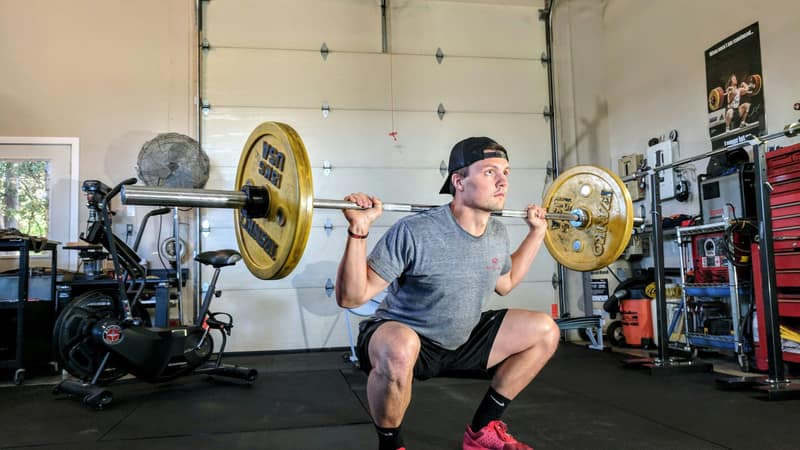
Meniscus Tear Physical Therapy in Tampa: Surgery or Rehab?
What your MRI really means, the red flags, what the research says about surgery versus physical therapy, and the plan that gets you squatting, running and pivoting again.

Runner’s Knee in Hybrid Athletes
Pain around the kneecap that keeps coming back? The capacity equation, the three mistakes keeping athletes stuck, and the loading plan that breaks the cycle.
Continue Reading
IT Band Syndrome Physical Therapy in Tampa
Outside-of-knee pain at the same mile every run? Why foam rolling fails, a five-point self-check, and the plan that gets you back to full mileage.
Continue Reading
Beyond the Calendar: Modern ACL Recovery
Why modern ACL recovery is about passing functional tests, not watching the clock, and how that thinking applies to every knee injury.
Continue Reading