
Patellar Tendonitis Physical Therapy in Tampa: How to Fix Jumper’s Knee Without Giving Up Squats or Jumps
It bites right below your kneecap on the first few squats, fades once you’re warm, then makes the stairs miserable the next morning. That’s the classic pattern of patellar tendonitis, better known as jumper’s knee. Here’s a doctor-led guide for Tampa & St. Petersburg lifters, HYROX and CrossFit athletes, runners and volleyball players: how to tell it from runner’s knee, how long it really takes, the training swaps that keep you lifting, and the loading plan that rebuilds the tendon.

Patellar Tendonitis Physical Therapy in Tampa: When the Front of Your Knee Bites Back
Most people searching for patellar tendonitis physical therapy in Tampa describe the same pattern. A sharp, pinpoint pain just below the kneecap on the first few squats of the session, which quiets down once they’re warm. They finish the workout, maybe with a box-jump finisher or a set of wall balls, and the next morning the stairs are the hardest part of the day. A week later it’s the same, or a little worse. They’ve tried resting it for two weeks. It came back the first day they trained hard again.
It’s common, especially in athletes who jump and squat. In a survey of 891 non-elite athletes in the Netherlands, 8.5% had jumper’s knee at the time, rising to 14.4% of volleyball players, and it was almost twice as common in men as in women (Zwerver et al., Am J Sports Med, 2011). Among 613 elite Norwegian athletes, 14.2% had it, including 44.6% of volleyball players and 31.9% of basketball players, and those with symptoms had been living with them for an average of more than two and a half years (Lian et al., Am J Sports Med, 2005).
It also doesn’t reliably fade on its own. In a small 15-year follow-up of Finnish athletes, 9 of the 17 who had jumper’s knee said they had ended their sports career because of it, compared with 1 of 14 athletes without it (Kettunen et al., Am J Sports Med, 2002). If you’re a lifter, HYROX or CrossFit athlete, runner or volleyball player in your 20s or 30s, that isn’t a reason to stop training. It’s a reason to deal with this properly, early.
This guide covers what’s actually going on in the tendon, how to tell it apart from runner’s knee and the other look-alikes, the red flags that need a physician, how long it realistically takes, how to keep squatting, running and jumping while it heals, and how our performance physical therapy gets lifters, HYROX athletes and jumpers back to full training.
The Short Version
- It’s a load problem, not an inflammation problem. The pain sits in a small spot just below the kneecap and flares with jumping, landing and deep or fast squats.
- Rest calms it but doesn’t fix it. The tendon needs the right load, progressed over months, to get its capacity back.
- You can usually keep training. Change squat depth and speed and cut jump volume, then judge it by how the tendon feels the next morning.
- Heavy, slow strength work has the best evidence, followed by a gradual return of jumping and landing. In a randomized trial it held up at six months, while the results of a cortisone shot faded.
- Rule out the look-alikes. Runner’s knee, fat pad irritation and meniscus problems can feel similar but need different plans, and a sudden pop with a knee you can’t straighten needs a physician the same day.
What Patellar Tendonitis Is (and Why “Tendinopathy” Is the Better Word)
The patellar tendon is the short, thick band that runs from the bottom of your kneecap to the bump at the top of your shin. It’s the last link between your quadriceps and your lower leg, so every squat, lunge, jump and running stride passes through it. It also works like a spring: when you land, or drop quickly into the bottom of a squat, it stretches and stores energy, then gives that energy back as you drive up. That spring-like job is exactly what overloads it.
The ending “-itis” means inflammation, but painful tendons in athletes mostly show changes in the tendon’s structure and in how well it tolerates load, rather than classic inflammation. That’s why clinicians now call it patellar tendinopathy. We use “patellar tendonitis,” “patellar tendinopathy” and “jumper’s knee” interchangeably in this guide, because they all describe the same problem. The distinction matters for one practical reason: it explains why anti-inflammatories, ice and rest so rarely fix it.
Two features define it, according to an expert clinical review in the Journal of Orthopaedic & Sports Physical Therapy: pain localized to the bottom tip of the kneecap, and pain that rises with the demand on the thigh muscles, especially in movements that store and release energy in the tendon, like jumping and landing (Malliaras et al., J Orthop Sports Phys Ther, 2015). Tendon pain also tends to sit somewhere on a spectrum, from a reactive, irritable tendon after a sudden spike in load to a longer-standing problem in a tendon that has been overloaded for months or years (Cook & Purdam, Br J Sports Med, 2009). Where you are on that spectrum shapes how hard we load it early on.
The most common thing it gets confused with is runner’s knee, which is pain from the joint behind the kneecap rather than the tendon below it.
| At a glance | Patellar tendonitis (jumper’s knee) | Runner’s knee (patellofemoral pain) |
|---|---|---|
| Where it hurts | A small spot just below the kneecap, where the tendon attaches; you can usually put one finger on it | A vaguer ache around or behind the kneecap that’s hard to pin down |
| How it behaves | Sharp on the first reps, eases as you warm up, then is worse later that day or the next morning | Builds with time on stairs, squats or runs, and often aches after sitting with the knees bent |
| What provokes it most | Jumping and landing, fast or deep loaded squats, wall balls, lunges, sprinting | Going down stairs, deep squats, long runs, sitting through a movie or a flight |
| Typical athlete | Younger and more often male; jump- and squat-heavy: volleyball, basketball, CrossFit and HYROX, Olympic lifting | Runners and lifters of any age; more common in women |
| What fixes it | Progressive tendon loading over months: holds, then heavy slow strength, then the spring | Load management plus hip and quadriceps strength; see our runner’s knee guide |
The two can overlap, especially in lifters who squat deep and also run, and the plans differ enough that it’s worth getting right. If you’re not sure which one you have, the self-check below and an assessment will sort it out.
Knee Pain Below the Kneecap? A Front-of-Knee Pain Map
Put one finger where it hurts and think about what sets it off. Pain at the front of the knee in active adults usually falls into a handful of patterns. They overlap, and none of them is a diagnosis on its own, but they tell us where to look first.
Just Below the Kneecap, One Finger-Width Spot
Usually: patellar tendinopathy (jumper’s knee)
Pain at the bottom tip of the kneecap that’s sharp on landing, on the first reps of a squat, or out of the bottom of a lunge. It often warms up during a session and comes back worse that evening or the next morning. Pressing on the spot is tender.
Around or Behind the Kneecap, Hard to Pin Down
Usually: patellofemoral pain (runner’s knee)
A diffuse ache around or behind the kneecap, worse on stairs, in deep squats and after sitting with your knees bent. You tend to rub the whole front of the knee rather than point to a spot. Our runner’s knee guide for hybrid athletes covers it.
Just Above the Kneecap
Possibly: quadriceps tendinopathy
The same kind of load-related tendon pain, but at the top edge of the kneecap, where the quadriceps tendon attaches. It’s less common, often shows up in Olympic lifters and athletes who squat very deep, and is managed with much the same loading logic.
Deep, on Either Side of the Tendon
Possibly: fat pad irritation
A deep, puffy-feeling pain on either side of the tendon, just below the kneecap, that’s worse when you lock your knee fully straight or stand with your knees pushed back. It can sit right next to the tendon and needs a slightly different plan.
Inside or Outside of the Knee, With Catching
Possibly: a meniscus problem
Pain along the joint line on the inner or outer side of the knee, often after a twist, sometimes with swelling, catching or a knee that occasionally locks. Our meniscus tear physical therapy guide covers that side of the knee.
A Sudden Pop and a Knee You Can’t Straighten
Possibly: a tendon rupture
A pop on a landing or a heavy squat, sudden severe pain, a kneecap that sits higher or lower than the other one, and an inability to lift your leg straight off the bed. That needs same-day medical care, not rehab.
A pinpoint spot at the bottom of the kneecap that gets worse with jumping and loaded squats, and settles as you warm up, is the pattern most of this guide is about.
Why Lifters, HYROX Athletes and Jumpers Get Patellar Tendonitis
Tendons adapt to load, but slowly, over weeks and months. Muscles and fitness adapt faster. Patellar tendinopathy usually appears when the load on the tendon outpaces what it has been prepared for. Most of the cases we see come from some combination of these:
- A spike in jumping and landing. Box jumps (especially jumping down off the box), double-unders, burpee broad jumps, depth jumps and bounding all load the tendon as a spring. A new program or class that adds them all at once is a classic trigger.
- High-rep squat-and-throw work. A HYROX ends with 100 wall balls, after eight 1 km runs and 100 meters of sandbag lunges. CrossFit-style workouts stack thrusters and wall balls by the dozen. That’s a lot of fast, deep knee bends on tired legs.
- Deep, fast, knee-forward squatting. High-bar and front squats, the catch of a clean or snatch, and bouncing out of the bottom of a squat put the tendon under high load at deep knee angles. Lifters often notice it a few weeks into a new block, when volume or intensity steps up.
- Jumping sports. In the large prevalence studies, volleyball and basketball had the highest rates of jumper’s knee, and sand volleyball still involves hundreds of jumps and landings a session.
- Hills, stairs and sprints. Steady running on the flat is usually tolerated, but hill sprints, stair workouts, downhill running and fast bridge repeats load the tendon much more.
- Being good at jumping. In a five-year study of 150 young elite volleyball players, the young men who jumped highest at the start were more likely to develop jumper’s knee, a finding the researchers called the “jumper’s knee paradox” (Visnes et al., Br J Sports Med, 2013). Powerful athletes can generate loads their tendons aren’t yet ready for.
- Body size and age. In the Dutch survey, athletes with jumper’s knee were younger, taller and heavier than those without it, and men were affected almost twice as often as women (Zwerver et al., 2011).
Lifters: why it shows up in week four of a program
Strength improves quickly in a new training block. Tendon capacity doesn’t. Three or four weeks in, the weights are heavier, the squats are deeper or more frequent, and the tendon is being asked to handle more than it was a month ago. Add a jumping finisher, a weekend HYROX simulation or a pickup basketball game and the knee starts to complain. It’s rarely one bad rep. It’s the total load across the week, and that’s something we can measure and adjust without taking you out of the gym.
Why rest alone doesn’t fix it
Two weeks off usually makes the pain quieter. It also makes the tendon and the quadriceps a little weaker, so when you return to the same training, the gap between what the tendon can handle and what you’re asking of it is just as big, sometimes bigger. That’s why so many athletes describe a cycle of rest, return, flare and rest again. Breaking that cycle means building the tendon’s capacity back up, which is what the rest of this guide is about.

Red Flags: When Knee Pain Needs a Physician First
Most patellar tendon pain in lifters, runners and jumping athletes is something a physical therapist can assess and treat directly, and in Florida you can start without a referral. A few patterns need a physician first, and some need care the same day.
Get same-day medical care if:
- You felt a pop on a landing or a heavy lift and now can’t straighten your knee or lift your leg straight off the bed, or your kneecap sits noticeably higher or lower than the other one. That can mean a ruptured patellar or quadriceps tendon, which usually needs prompt surgical assessment.
- Your knee is hot, red and swollen, especially with a fever or feeling unwell, or after a cut, graze or injection near the knee. A joint infection is rare but an emergency.
- You can’t put weight on the leg after a fall, twist or collision.
See a physician promptly if:
- The knee swelled up quickly after a twist or awkward landing, gives way, or locks, which points to a ligament or meniscus injury rather than the tendon.
- Pain is constant, wakes you at night or is getting steadily worse regardless of what you do, or comes with unexplained weight loss.
- Several joints are painful or swollen at once, or the tendon pain came with eye, skin or gut symptoms. That can be an inflammatory condition that needs medical treatment.
- The tendon pain started soon after a course of fluoroquinolone antibiotics (such as ciprofloxacin or levofloxacin) or steroid tablets. These medicines carry a warning about tendon damage, so your prescriber needs to know.
None of these automatically means something serious. They mean the plan starts with the right clinician. If you’re not sure whether any of them apply, a physical therapy evaluation screens for all of them in the first session and points you to the right physician when you need one.
Is It Patellar Tendonitis? A Five-Minute Self-Check
If none of the red flags apply, these checks help you see which pattern you’re dealing with and give you a baseline to track. They aren’t a diagnosis and they don’t replace an assessment. Stop any test that causes sharp pain.
- Find the spot. Sit with your knee straight and relaxed and press along the bottom edge of the kneecap and down the tendon. A sharply tender spot right at the bottom tip of the kneecap fits the patellar tendon. Tenderness on either side of the tendon, around the kneecap or along the joint line points elsewhere.
- Try a single-leg decline squat. Stand on one leg on a slope, or with your heel raised on a weight plate, and bend the knee slowly to about halfway, holding something for balance. Rate the pain at the tendon from 0 to 10. This is the test researchers use most, because it loads the tendon on purpose.
- Notice the warm-up pattern. Tendon pain is typically worst on the first reps, eases as you warm up, then comes back that evening or the next morning. Pain that builds steadily the longer you go is more typical of runner’s knee.
- Hop gently. Ten small hops on the sore leg, then the other. Pain at the tendon on landing, and none on the other side, is a strong pointer to the tendon. Skip this if the decline squat was more than about 5 out of 10.
- Check stairs and sitting. Pain going downstairs fits both problems. An ache after sitting through a long meeting or a flight with your knees bent is more typical of the kneecap joint than the tendon.
A number worth tracking
Rate your single-leg decline squat from 0 to 10 at the same time each week, ideally first thing in the morning, which is when tendons are most honest. Researchers also use a short questionnaire called the VISA-P, scored out of 100, where a healthy knee scores close to 100. Elite athletes with jumper’s knee averaged 64 (Lian et al., 2005). A recovering tendon should be trending toward low decline-squat pain and a higher score. That trend tells you far more than “does it still hurt?”, and it’s the kind of measure we track in a movement assessment.
Not sure which one you’ve got? A one-on-one assessment answers that in the first session: pinpointing the source, ruling out the look-alikes, and giving you a plan that keeps you training where possible. See how our performance physical therapy works, or book a free discovery call to talk it through first.
How Long Does Patellar Tendonitis Take to Heal?
Longer than most athletes expect, and longer than a muscle strain. The trials that tested loading programs give a realistic picture:
- Twelve weeks of heavy slow strength training improved pain and function, and the gains held at six months (Kongsgaard et al., Scand J Med Sci Sports, 2009).
- In a later trial, a 12-week program improved function scores by 12 to 13 points, and people kept improving afterward, gaining roughly another 9 to 10 points by one year (Agergaard et al., Am J Sports Med, 2021).
- In athletes with long-standing jumper’s knee (a median of two years, and most had already tried other treatments), a 24-week progressive loading program had 43% back to sport at the end of the trial, compared with 27% after a traditional eccentric program (Breda et al., Br J Sports Med, 2021).
Expert clinicians list unrealistic rehabilitation time frames as one of the most common pitfalls in managing it (Malliaras et al., 2015). In practice, most of the athletes we see feel a real difference within a few weeks once the load is right, and keep training throughout in some form, but rebuilding the tendon’s capacity usually takes three months or more. A tendon caught early, after a recent spike in training, usually settles faster than one that has been flaring on and off for a year or two.
Do you need an MRI or ultrasound?
Usually not. The diagnosis is made clinically, and imaging can show tendon changes in people with no pain at all, so a scan can’t tell you on its own whether the tendon is the source (Malliaras et al., 2015). Scans also don’t track recovery well. In a trial of volleyball and basketball players, pain improved over a four-week exercise program while the tendon’s appearance on specialized ultrasound didn’t change (van Ark et al., Am J Phys Med Rehabil, 2018). Imaging is worth it when a rupture is suspected, when the knee is swollen or locking, when the pain isn’t behaving like a tendon, or when a well-run loading program hasn’t helped after a few months. Otherwise, how the tendon responds to load tells us far more than how it looks.
Can You Squat, Run or Jump With Patellar Tendonitis? Usually, With the Right Swaps
Tendons respond to load, so stopping everything isn’t the answer, and neither is grinding through the same program. The aim is to keep as much of your training as the tendon tolerates, take out the loads it doesn’t, and judge it by the next-day response rather than the pain in the moment. In a randomized trial in Achilles tendinopathy, athletes who kept running and jumping guided by a pain-monitoring model recovered just as well as those told to stop (Silbernagel et al., Am J Sports Med, 2007). It’s the same idea as the traffic-light model in our guide to training through pain as a HYROX athlete: pain is information about load, not an automatic stop sign.
The Simple Rules
- During training: mild discomfort at the tendon up to about 3 out of 10 that doesn’t climb set to set is acceptable. Sharp pain, or pain that keeps rising, means that exercise is done for the day.
- The next morning: tendons react 24 hours later. Re-test your decline squat or a few stairs. If it’s no worse than your usual baseline, the load was fine. If it’s worse, scale the next session back before progressing again.
- One change at a time: add depth, load, jumps or speed, never more than one in the same week.
Training swaps that usually work
This is where most athletes lose fitness and strength they don’t need to. Treat the table below as a starting point, not a prescription: keep what’s quiet, change what isn’t.
| Movement | What usually provokes it | Try instead, for now |
|---|---|---|
| Squats | Deep, fast, knee-forward squats: high-bar and front squats, the catch of a clean or snatch, bouncing out of the bottom | Box squats to a comfortable depth, a slower tempo (three seconds down, a pause, then up), a slightly wider stance; cut depth and speed before you cut the load |
| Jumping and plyometrics | Box jumps (especially jumping down), depth jumps, double-unders, burpee broad jumps, bounding | Controlled step-ups and step-downs, burpees without the jump, sled pulls; low pogo hops come back once the tendon has settled |
| Wall balls and thrusters | High-rep sets of 20 to 30+ to a deep squat, especially late in a workout | Smaller sets, a lighter ball or a box under you to cap depth; push presses for the throw and wall-sit holds for the legs |
| Lunges | Long walking or sandbag lunges, short deep front-foot lunges, jumping lunges | Reverse lunges with a longer step, split-squat holds, shorter distances; a longer stride shares more of the work with the hip |
| Running | Hill sprints, stairs, downhill running, track sprints, fast bridge repeats | Easy running on the flat usually carries on; SkiErg, rower and bike intervals for intensity |
| Volleyball and basketball | Jump-heavy practices, back-to-back games, tournaments and spiking or rebounding volume | Count your jumps and cap them; skill work with fewer maximal jumps; shorter sessions and fewer games per week while you rebuild |
Deadlifts, Romanian deadlifts, hip thrusts, hamstring work, carries and all of your upper-body training usually carry on with little change. For most lifters, the squat stays in the program; it just changes shape for a while.
Why the rest of your week matters as much as the rehab
Adding rehab exercises on top of an unchanged schedule often doesn’t work. In a trial of elite volleyball players who kept playing a full competitive season, adding painful eccentric decline squats made no difference to their knees at all (Visnes et al., Clin J Sport Med, 2005). By contrast, in jumping athletes who carried on playing at least three times a week, four weeks of either isometric holds or isotonic strength exercises reduced their tendon pain (van Ark et al., J Sci Med Sport, 2016). The lesson: the right exercises help, but the total load across your week has to fit what the tendon can handle right now.
Can you run with patellar tendonitis?
Usually, yes. Steady running on flat ground loads the patellar tendon far less than jumping, hills or stairs, and most runners and hybrid athletes can keep their easy miles while the tendon settles. Bayshore Boulevard and the St. Pete waterfront are ideal for it: flat, and easy to cut short. Hills, stairs, sprints and downhill running are the first things to come out and the last things to come back.

What a Patellar Tendonitis Physical Therapy Assessment Looks For
A scan, if you have one, shows what the tendon looks like. It doesn’t show how much load your tendon can take today, why it got overloaded, or when it’s ready for box jumps and heavy squats again. Here’s what a doctor-led movement assessment for patellar tendinopathy covers at Forward Physio.
Pinpointing the Source
Palpation of the tendon, kneecap and joint lines, the single-leg decline squat, and tests that separate the patellar tendon from runner’s knee, the fat pad, the quadriceps tendon and the meniscus, plus the red-flag screen, so the plan starts from the right diagnosis.
Tendon and Quad Capacity
Single-leg strength and endurance compared side to side, how much load the tendon tolerates in a squat, split squat and leg press, and later hop and landing tests, so we know where you’re starting and can re-test it as you progress.
How You Move
Your squat depth, stance and knee travel, how you land and change direction, your running stride, and how you set up wall balls, lunges and Olympic lifts. Barbell mechanics are a specialty here, so bring video of your squat or your jump if you have it.
Your Training Week
Every source of knee load across the week: squat volume and depth, jump counts, HYROX and CrossFit sessions, hills and stairs, leagues, desk hours and sleep. Patellar tendonitis is often as much a programming problem as a tissue problem.
Every one of those is re-tested as you progress. That’s how we decide when you’re ready to jump, squat deep and heavy, race or play: on the numbers and the next-day response, not because a set number of weeks has passed.

How We Approach Patellar Tendonitis Physical Therapy at Forward Physio
The plan is simple to describe: calm the tendon down without shutting your training down, build heavy, slow strength, restore the spring it needs for jumping and landing, then return to full training and competition on criteria. It follows the progressive, load-based approach with the strongest research behind it, built into a doctor-led, one-on-one plan around how you train.
Calm It Down Without Shutting You Down
We pull back the loads that flare the tendon most, usually jump volume and fast, deep squats, and keep the rest. Isometrics, sustained holds such as a wall sit, a Spanish squat with a band behind the knees or a leg-extension hold, can ease tendon pain for some people. In a small study of six volleyball players, a session of heavy holds took pain from 7 out of 10 almost to zero for at least 45 minutes (Rio et al., Br J Sports Med, 2015). Larger studies since have found smaller effects, and similar relief from ordinary dynamic strength exercise (Holden et al., J Sci Med Sport, 2020), so we use holds when they help you, not as a magic fix.
Build Heavy, Slow Strength
This is the backbone. In a randomized trial, heavy slow resistance training (squats, hack squats and leg presses, about three seconds down and three up, three times a week for 12 weeks) improved pain and function, and the gains held at six months, while the benefit of a cortisone injection faded (Kongsgaard et al., 2009). A later trial found moderate loads of about 55% of a one-rep max worked as well as heavy loads of about 90% when total volume was matched (Agergaard et al., 2021). That gives us room to pick a load your tendon tolerates and still make progress. We coach it like any other lift rather than handing you a sheet. That’s capacity-based strength training applied to the knee.
Restore the Spring
Strength isn’t enough for a tendon whose job is to store and release energy. Once heavy, slow work is comfortable, we add jumping and landing back in stages: pogo hops and skips, box jumps stepping down, landings, bounding, then burpee broad jumps, double-unders and sport-specific jumps. In a trial of athletes with long-standing jumper’s knee, a program that progressed from holds to slow strength to energy-storage work to sport improved function scores by 28 points, against 18 points for a traditional eccentric decline-squat program (Breda et al., 2021).
Use Hands-On Work to Open the Window
Skilled manual therapy and dry needling of the quadriceps and surrounding muscles can ease pain and guarding so the loading feels better. They don’t rebuild a tendon, and we don’t treat them as the fix. They’re part of a broader pain management plan that buys a window for the strength work. Our dry needling guide and manual therapy guide explain how each fits.
Fix What Overloaded It, Then Return on Criteria
We map your knee load across the week and change what tipped it over: the new squat block, the box-jump finishers, the HYROX simulation on top of a volleyball league, the jump in running hills. Then deep heavy squats, jump volume, races and games come back in planned steps once strength, hopping and the next-morning check say you’re ready. That’s a structured return to sport, not “try it and see.”
What about cortisone, PRP and shockwave?
None of them should be the first step. In the Kongsgaard trial, the cortisone group improved at first, but by six months their results had deteriorated, while the strength-training group’s held (Kongsgaard et al., 2009). A review of 37 randomized trials found that shockwave therapy added to exercise did no better than sham shockwave, that the evidence for injections was limited, and that exercise-based loading should remain the first-line treatment (Challoumas et al., BMJ Open Sport Exerc Med, 2021). If a well-dosed loading program hasn’t helped after a fair trial, other options are a reasonable conversation with a sports medicine physician, and we’re happy to coordinate that.
One-on-One, Doctor-Led Care vs. the Insurance-Driven Knee Visit
Patellar tendinopathy is a textbook example of why the care model matters. The insurance-driven version looks the same in most places: a hot pack, some ultrasound or electrical stimulation, a few straight-leg raises and clamshells, ice on the way out, and a printout, with one clinician splitting time between three or four people. None of that builds the heavy strength and spring a tendon needs, or answers the questions you actually have: can I still squat on Monday, can I do my next HYROX, and how do I stop this coming back every time my training ramps up?
Answering those takes time: measuring your tendon’s capacity, progressing the load every week, coaching the lifts, working the swaps into your actual program, and planning around your race, your meet or your league. At Forward Physio every session is 45 to 60 minutes, one-on-one, with a doctor of physical therapy: no techs, no shared time. Both of our doctors lift, run and train for HYROX themselves, and Dr. Nick has competed in bodybuilding and knows powerlifting and Olympic lifting inside out, so the conversation starts from how you train rather than from a generic protocol.
You don’t need a physician referral to start physical therapy in Florida. We’re an out-of-network provider: we don’t bill insurance directly, but we provide detailed superbills you can submit for possible out-of-network reimbursement, and we accept HSA and FSA cards. Our FAQ covers the details, and a free discovery call is the easiest way to find out whether we’re the right fit.
A sore tendon doesn’t need a break from load. It needs the right load, every week, for longer than you’d like.
A Return-to-Squatting, Jumping and Running Progression for Patellar Tendonitis
This is the framework we adapt for each athlete. How fast you move through it varies a lot, depending on how long the tendon has been sore and how much your sport asks of it; the rules for moving between phases (the simple rules above) don’t.
- Phase 1: Settle (usually the first one to two weeks). Jump volume cut right back and squats modified. Isometric holds most days if they ease the pain. Flat running, upper body, hinges and conditioning on the SkiErg or bike carry on.
- Phase 2: Build strength (roughly weeks 2 to 12, and kept for good). Heavy, slow strength work three times a week: leg press, split squats, box or hack squats and leg extensions, with load progressing as the next-morning check allows. Squat depth returns gradually.
- Phase 3: Restore the spring (often from around weeks 6 to 10). Low pogo hops and skips, then box jumps stepping down, landings, bounding, burpee broad jumps and double-unders, built up in volume before height or speed.
- Phase 4: Full training and competition. Deep, heavy squats, wall-ball and lunge volume, jump-heavy sessions, races and games, built back up week by week, with heavy leg work kept in twice a week.
Checkpoints before jumping and before competing
- Before jumping and plyometrics: single-leg decline squat pain no higher than about 3 out of 10 and settling quickly, two to three weeks of heavy, slow strength work with no next-morning flares, and single-leg strength close to the other side.
- Before competition, a HYROX or full league play: hopping and repeated landings with little or no pain, jump and lunge volume close to what race day or game day asks for, and a full week of normal training with no next-morning setbacks.
How long does that take? For a tendon caught early, a few weeks to feel better and around three months to be fully back is common; long-standing tendons often take longer. If the tendon isn’t steadily improving after six to eight weeks of well-dosed loading, it’s worth a closer look, including imaging or a physician opinion if the result would change the plan. Readiness for your meet, your HYROX or your season is decided by the criteria, not the calendar.

Training in Tampa Bay: Where Patellar Tendons Get Tested
A few things about training here make patellar tendon pain worth getting on top of early, especially heading into winter.
- HYROX has arrived. HYROX held its first-ever Tampa race at the Tampa Convention Center from October 22 to 25, 2026, with organizers expecting around 18,700 athletes (Hoodline). For a lot of local athletes, that race is now the benchmark, and the next block, with more wall balls, sandbag lunges and burpee broad jumps, is already starting.
- Open season in the gyms. The CrossFit Open usually starts in late February, so functional gyms across Tampa and St. Pete spend the winter ramping up box jumps, double-unders, thrusters and wall balls, often all at the same time.
- Race season adds hills and speed. The St. Pete Run Fest half marathon is on November 15, 2026, at the end of a November 13–15 race weekend (St. Pete Run Fest), and the Publix Gasparilla Distance Classic Race Weekend returns February 20–21, 2027, for its 50th running (Gasparilla Distance Classic). A flat city does its hill work on bridges, stairs and parking-garage ramps, usually fast. Our guide to physical therapy for runners in Tampa covers the bigger picture.
- Sand volleyball never stops. With beach courts from St. Pete Beach to Clearwater and leagues around Tampa, volleyball here is a year-round sport, and many of the players are also lifting or doing HYROX-style training during the week.
- Desk to box jumps. A day at a desk in Westshore, on Water Street or in downtown St. Pete, followed by a 6 p.m. class that opens with box jumps, gives a stiff tendon very little warm-up. Ten minutes of easy movement and a few progressive squats and hops before the first jump makes a real difference.
None of that means training less. It means planning knee load the way you’d plan your squat program or your weekly mileage.
Keeping Patellar Tendonitis From Coming Back
Tendons that have been sore before tend to complain again when training ramps up quickly. We’ve written about why “injury prevention” is really risk reduction, but the athletes who stay on track with healthy knees tend to share a few habits:
- They keep heavy leg work after the pain is gone. Two sessions a week, year-round, of slow, heavy squatting, split squats or leg presses. The tendon keeps the capacity you keep using.
- They count jumps. Box jumps, double-unders, wall balls and burpee broad jumps add up across classes. Tracking a rough weekly total and building it gradually beats doubling it because a new program or a competition is coming.
- They change one thing at a time. A new strength block, a HYROX build and a volleyball league all starting in the same month is how a quiet tendon becomes a sore one.
- They respect the next morning. A tendon that’s stiffer and sorer the morning after a session is giving early feedback. Backing off for a session or two then is far cheaper than backing off for two months later.
- They get assessed before a big block. A proactive performance assessment six to eight weeks before a HYROX, a meet or a season catches strength gaps before your training finds them. That’s what our injury prevention work is built around.
If your pain sits around or behind the kneecap rather than below it, our guide to runner’s knee in hybrid athletes covers that pattern, and joint-line pain with catching is covered in our meniscus tear guide. For the bigger picture on resilient knees, read the runner’s guide to bulletproof knees.
Squat, Jump and Run Without Knee Pain — Book a Patellar Tendonitis Evaluation in Tampa
If the front of your knee bites on every squat, flares after box jumps and wall balls, or comes back every time your training ramps up, let’s build you a real plan. One-on-one time with a doctor of physical therapy, a clear answer on what’s actually going on, a screen for the look-alikes, and a criteria-based roadmap back to heavy squats, jumping, racing and playing. Serving lifters, HYROX and CrossFit athletes, runners and volleyball players across Tampa, South Tampa, Westshore and St. Petersburg.
Book Your Patellar Tendonitis EvaluationPatellar Tendonitis Physical Therapy in Tampa: Frequently Asked Questions
Common questions we hear from lifters, HYROX and CrossFit athletes, runners and volleyball players across Tampa, Westshore, South Tampa and St. Petersburg dealing with jumper’s knee.
How long does patellar tendonitis take to heal?
Longer than most athletes expect: think months, not weeks. In clinical trials, structured loading programs usually ran for 12 weeks, and people kept improving for up to a year afterward. In athletes with long-standing jumper’s knee, a little under half were back to their sport after 24 weeks of progressive loading. Most athletes we see feel a real difference within a few weeks once the load is right, and keep training in some form throughout, but rebuilding the tendon’s capacity usually takes three months or more.
Can I keep squatting with patellar tendonitis?
Usually, yes, and squatting is often part of the fix. What changes is depth, speed and volume: a slower tempo, a box to a comfortable depth, and fewer bouncy or high-rep sets, while keeping the load meaningful. Discomfort up to about 3 out of 10 that settles by the next morning is generally acceptable. If the tendon is sharper or stiffer the next day, scale back the next session. Heavy, slow leg work is one of the best-supported treatments for patellar tendinopathy.
Can I run with patellar tendonitis?
Most people can keep running at an easy pace on flat ground, because steady running loads the patellar tendon far less than jumping, hills or stairs. Hill sprints, stairs, downhill running and fast bridge repeats are usually the first things to cut and the last to come back. The same rule applies: mild pain that settles by the next morning is fine, but a tendon that’s worse the next day means the load was too much.
Is it patellar tendonitis or runner’s knee?
Location is the biggest clue. Patellar tendonitis hurts in a small spot just below the kneecap and is provoked by jumping, landing and loaded squats; it often eases as you warm up and is worse the next day. Runner’s knee (patellofemoral pain) is a vaguer ache around or behind the kneecap, often worse on stairs and after sitting with the knees bent. The two can overlap and the plans differ, so an assessment is worth it if you’re not sure.
Should I get a cortisone shot, PRP or shockwave for patellar tendonitis?
Not as a first step. In a randomized trial, a cortisone injection helped in the short term, but by six months the results had deteriorated, while heavy slow strength training held its gains. A review of 37 randomized trials found that shockwave added to exercise did no better than sham shockwave and that the evidence for injections was limited. If a well-dosed loading program hasn’t helped after a fair trial, other options are a reasonable conversation with a sports medicine physician.
Do patellar straps or knee sleeves help jumper’s knee?
A strap can take the edge off. In a randomized trial of 97 athletes with patellar tendinopathy, a patellar strap and sports tape both reduced pain on a decline squat compared with nothing, but not compared with placebo tape, and only in the short term. Use one if it helps you train comfortably; just don’t treat it as the fix. Knee sleeves keep the knee warm and are fine for lifting, but they don’t change the tendon.
When should I see a physical therapist for patellar tendonitis in Tampa?
When pain below your kneecap has lasted more than a couple of weeks, keeps coming back whenever your training ramps up, or is starting to change how you squat, jump or run. Tendons caught early usually settle faster. If you felt a pop and can’t straighten your knee, or the knee is hot, red and swollen, see a physician first. You do not need a physician referral in Florida. A doctor-led, one-on-one patellar tendonitis physical therapy evaluation at Forward Physio will confirm what’s driving the pain, rule out the look-alikes, and build a loading plan around how you train. Call (813) 535-3676 or email info@forward-physio.com to book.
This article is general education, not a diagnosis or a substitute for an individual evaluation. Pain at the front of the knee has several possible causes, and the right plan depends on yours. If you’re unsure what’s going on, get assessed by a licensed clinician. If you felt a pop and can’t straighten your knee, or your knee is hot, red and swollen, seek same-day medical care.
More Performance Insights from Forward Physio

Patellar Tendonitis Physical Therapy in Tampa: Jumper’s Knee
Pain below the kneecap on squats and jumps? Tendon or runner’s knee, how long it really takes, and the loading plan that keeps you training.

Runner’s Knee in Hybrid Athletes
Pain around the kneecap that keeps coming back? The capacity equation, the three mistakes keeping athletes stuck, and the loading plan that breaks the cycle.
Continue Reading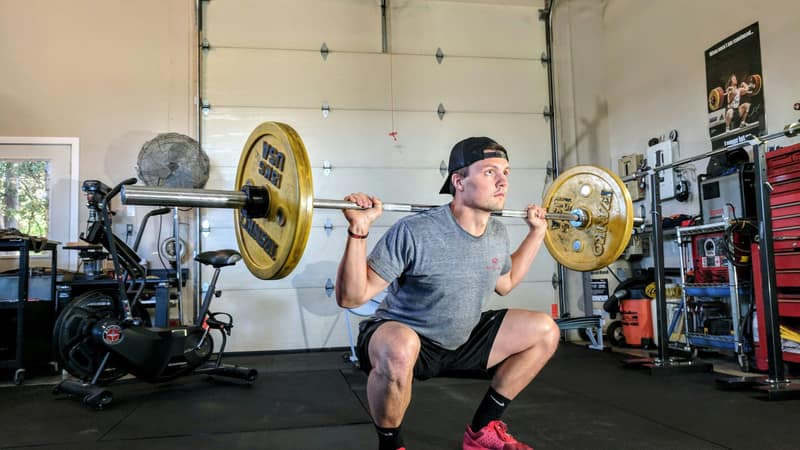
Meniscus Tear Physical Therapy in Tampa: Surgery or Rehab?
Torn meniscus on your MRI? When surgery helps, when it doesn’t, and the plan that gets you squatting, running and pivoting again.
Continue Reading
The Hyrox Athlete’s Guide to Training Through Pain
A performance PT’s framework for knowing when to push, when to modify, and when to get help.
Continue Reading