
The Hyrox Athlete’s Guide to Training Through Pain Without Breaking Down
A performance PT’s framework for knowing when to push, when to modify, and when to get help – the same one that keeps our athletes on the start line instead of the sidelines.
The Problem Every Hyrox Athlete Eventually Faces
You’re eight weeks out from your race. You’ve been stringing together brutal compromised runs, ski erg intervals, and sled sessions. Your knee started talking to you three weeks ago. Now it’s yelling.
So you do what most hybrid athletes do: you Google it, you scroll Reddit threads, you ice it, you take some ibuprofen, you back off for a few days. Maybe you book a massage. The pain dies down. You ramp back up. It comes back louder.
Sound familiar?
Here’s the uncomfortable truth we see every week at Forward Physio: most Hyrox athletes, runners, and lifters aren’t getting hurt because they’re training too hard. They’re getting hurt because they’re managing pain with tools that were never designed for the demands of hybrid sport.
This post will give you a framework we use with our athletes to decide, in real time, whether a symptom is a signal to push, modify, or get assessed.
“Most Hyrox athletes aren’t getting hurt because they’re training too hard. They’re getting hurt because they’re managing pain with tools that were never designed for the demands of hybrid sport.”
Why “Just Rest It” Is Terrible Advice for Hybrid Athletes
If you’re a Hyrox competitor, a CrossFit athlete, a runner who lifts, or someone who just refuses to stop being active as you get older, the advice you get from most healthcare providers was written for sedentary patients.
“Rest for two weeks.” “Stop running.” “Avoid squats.” “Come back when the pain is gone.”
That advice isn’t wrong because rest is bad. It’s wrong because it doesn’t account for what you actually need to be able to do. A Hyrox athlete who stops running for six weeks to let a patellar tendon calm down doesn’t come back to 80 wall balls and 1km sled pushes ready to go. They come back deconditioned, with a tendon that’s now weaker, and they get injured again within four weeks.
The research on tendinopathy, low back pain, and most running-related injuries has been clear for over a decade: load management and progressive loading beat rest almost every time. Passive treatments — massage, ice, dry needling, ultrasound, e-stim — can feel good in the moment, but they don’t build the tissue capacity you need to hold up under race-day demand.
The Biopsychosocial Model
Your pain isn’t just tissue damage on an MRI. It’s influenced by your training load, your sleep, your stress, your beliefs about the injury, and your nervous system’s threat response. Treat only the tissue and you miss most of the picture.
We still use manual therapy, dry needling, and soft tissue work. But it’s maybe 5–10% of a session. The other 90% is building you into an athlete who doesn’t need those tools to function.
The Traffic Light Framework: Push, Modify, or Assess
Here’s the mental model we teach our athletes. When a symptom shows up mid-training, run it through this filter.
🟢 Green Light – Train Through
Pain is 3/10 or lower, doesn’t get worse during the session, and is back to baseline within 24 hours. No limping or compensating. The symptom warms up and feels better as you move. Examples: nagging calf tightness that loosens after 400m, mild tendon ache that quiets when warm.
🟡 Yellow Light – Modify the Session
Pain creeps above 4–5/10, gets worse as the session goes on, takes more than 24 hours to settle, or you’re compensating. Modify doesn’t mean stop – adjust one variable: volume, intensity, range of motion, or exercise selection. You’re still training, just smarter.
🔴 Red Light – Get Assessed
Pain 6/10 or higher, you’re limping, symptoms are progressing week over week despite modifications, sharp/pinching/nerve-like pain, or it’s been more than 4–6 weeks not trending the right way. Stop self-managing and get a qualified set of eyes on it.
Most athletes wait far too long to hit the red-light threshold. They’ll spend three months self-treating before they book an appointment – and by then, what started as a simple load-management issue has become a confidence problem, a movement-pattern problem, and a tissue problem all at once.
The Big Three: Where Hybrid Athletes Actually Break Down
Over the last several years of working with hybrid athletes, the same three regions account for the majority of the issues we see. Here’s what’s actually going on and what to do about it.
The Knee (Especially the Patellar Tendon)
Who gets it: Runners who added heavy lifting. Lifters who added running. Anyone ramping Hyrox volume in the 8–12 weeks before a race.
What it feels like: A deep, achy pain right below the kneecap. Worse going downstairs, worse the morning after a heavy session, worse during sled pushes and wall balls.
What actually helps: Heavy, slow isometric and isotonic loading. The research is unambiguous – tendons need load to heal, and they respond best to slow, heavy, controlled tension. Ice and rest feel nice. They don’t fix the problem.
The Low Back
Who gets it: Deadlifters, snatchers, anyone doing burpee broad jumps at volume, anyone with a desk job who trains hard at 6 AM or 6 PM without a real warm-up.
What it feels like: Anything from a dull ache after sitting, to a sharp pinch with flexion, to the classic “I tweaked it setting up for my deadlift.” Can refer into the glute or hamstring.
What actually helps: Understanding that your back is robust and adaptable. Early return to movement (not bed rest). Loading the back in the positions that feel threatening, gradually and progressively. Addressing sleep, stress, training variability, and recovery.
The Shoulder
Who gets it: Anyone doing high volume overhead work – wall balls, dumbbell snatches, pull-ups, ski erg.
What it feels like: Pinching at the front or side of the shoulder overhead. Pain reaching back into a seatbelt. Weakness in a press that wasn’t there last month.
What actually helps: Specific loading of the rotator cuff and scapular muscles at the ranges you’re demanding in sport. Not generic band work. Not foam rolling. Direct, progressive loading that matches the positions you’re training in.
What Actually Happens in a Forward Physio Session
If you’ve only experienced traditional physical therapy – the kind where you get 10 minutes on a table, 10 minutes on a bike, and 15 minutes of theraband exercises with a tech – performance PT looks different.
A session with us looks a lot more like a skilled coaching session than a medical appointment:
- A thorough conversation. Training history, race goals, current symptoms, what you’ve tried, what you believe about the injury. This isn’t small talk – it’s where most of the diagnostic information actually lives.
- Movement assessment. Not generic screens. Specific to the demands of your sport. If you’re a Hyrox athlete, we want to see your wall ball, your sled push, your burpee broad jump, your running.
- Hands-on work when it’s useful. Dry needling, joint mobilizations, soft tissue work – but only when it’s going to meaningfully move the needle, and never as the main event.
- Loading. Figuring out exactly what your tissues and nervous system need, at what dose, to build capacity without flaring symptoms.
- A plan you can execute. Specific exercises, specific training modifications, specific metrics to track.
The goal isn’t to get you feeling better in the room. The goal is to get you training fully, racing fully, and not needing us.
When to Reach Out
If you’re reading this and recognizing yourself – the nagging knee, the back that keeps tweaking, the shoulder you’re pretending is fine – here’s the honest answer on when to book an appointment:
“Reach out when you want to stop managing a problem and start solving it.”
Self-management works for a lot of minor stuff. But if you’ve been dealing with the same symptom for more than 4–6 weeks, if it’s changing how you train, or if a race or event is on the horizon and you’re not sure you’ll make it – that’s the moment to get a trained set of eyes on it.
You don’t need to be “injured enough.” You don’t need a referral. You don’t need to wait until you can’t train at all. The best time to see a performance PT is when the problem is still small.
Ready to Train Without Breaking Down?
Stop letting pain decide what you can do. Get the framework, the loading, and the confidence to push harder without breaking down.
Book Free Discovery CallPerformance Insights
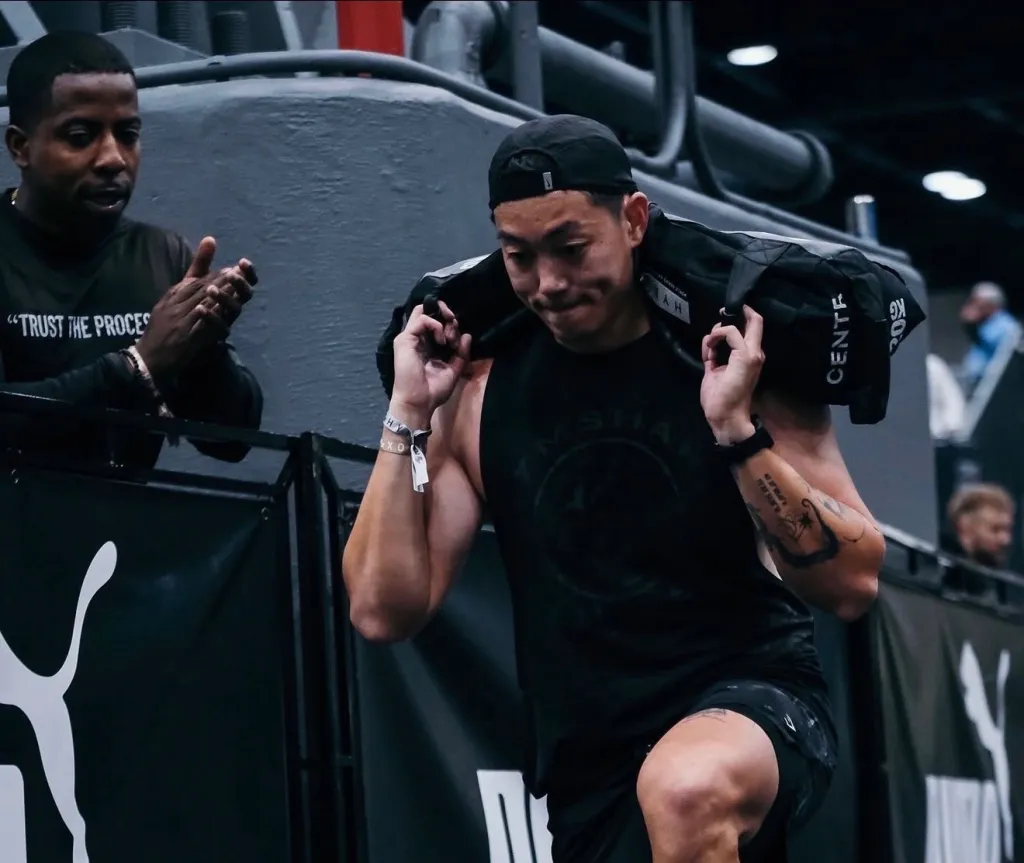
The Hyrox Athlete’s Guide to Training Through Pain
A performance PT’s framework for knowing when to push, when to modify, and when to get help.

Runner’s Knee in Hybrid Athletes
Why runner’s knee keeps coming back for hybrid athletes – and the loading protocol that actually fixes it.
Continue Reading
Your Back Is Not Fragile
Why most low back pain advice fails active adults – and what 20 years of research actually says.
Continue Reading
The Shoulder in Hyrox
Surviving wall balls, burpees, and ski erg – how to build a shoulder that handles hybrid volume.
Continue Reading
Why Your Deadlift is Causing Back Pain
Most back pain from deadlifting isn’t about weak muscles – it’s about movement patterns.
Continue Reading