
Dry Needling in Tampa: A Performance PT’s Guide for Runners, Lifters, and Hybrid Athletes
Doctor-led trigger point dry needling at Forward Physio in Tampa – the cash-pay alternative to insurance-driven PT for active adults who refuse to let pain decide what they do.
Why Tampa Athletes Are Asking About Dry Needling
Walk into any serious gym in South Tampa, Westshore, or downtown St. Petersburg right now, and you’ll hear the same conversation in the corner. Someone’s calf has been locking up on Bayshore long runs. Someone else’s glute med has been a mess since they ramped their lifting. A third person can’t lock out a press without the front of the shoulder pinching. The recommendation that keeps coming up is the same: try dry needling.
For a tool that’s now this common in Tampa Bay’s endurance and hybrid scene, dry needling is also one of the most misunderstood things in performance therapy. People assume it’s acupuncture. They assume it fixes pain by itself. They assume it’s the same in every clinic. None of that is quite right.
This is a doctor-led guide to dry needling in Tampa – what it actually is, what the research says about how it works, who it helps, and what a session at Forward Physio’s Westshore clinic actually looks like. If you’re trying to decide whether dry needling is right for your body, your sport, or your current injury, this is the post.
What Dry Needling Actually Is (and What It Isn’t)
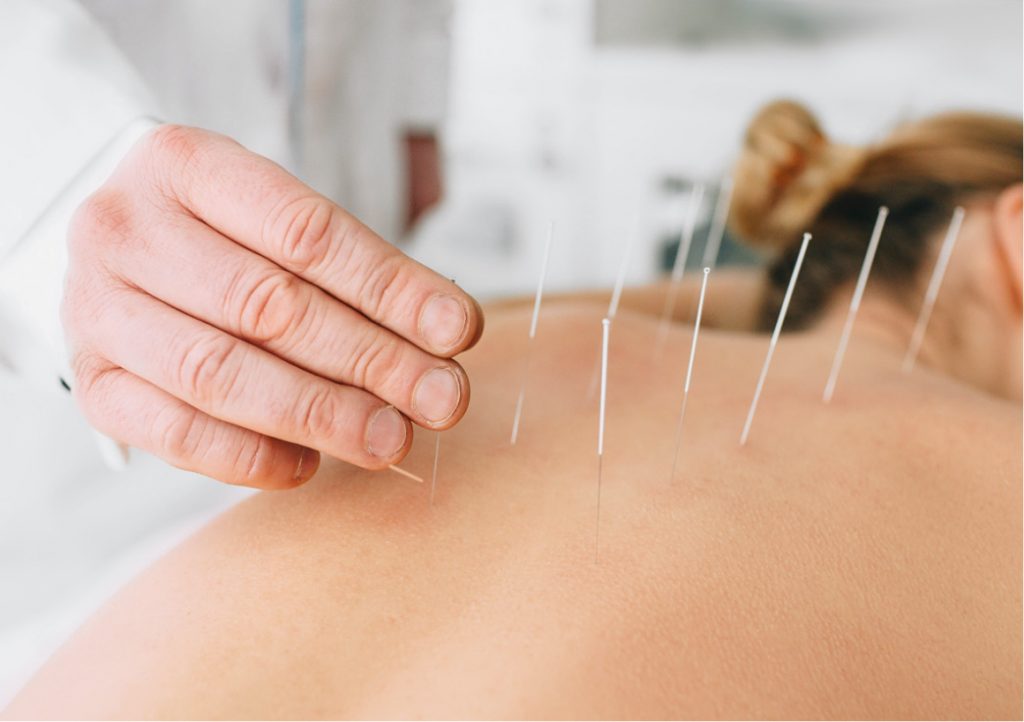
Dry needling is a treatment technique used by licensed doctors of physical therapy in which a thin filament needle – the same kind used in acupuncture, but used inside a completely different framework – is inserted into a trigger point or dysfunctional motor band of muscle.
The word “dry” just means the needle is solid. There’s no medication, no injection, no fluid being pushed in. The needle is the entire intervention.
What it’s not:
- It’s not acupuncture. Both use the same needles, but acupuncture is built on traditional Chinese meridian theory. Trigger point dry needling is built on Western anatomy, neuroscience, and motor control research.
- It’s not a magic fix. A needle alone doesn’t fix a pattern that took six months to build.
- It’s not the “deep tissue massage but worse” description you’ll see on Reddit. The mechanism is different, the goal is different, and the response in the muscle is different.
What it is: a precise, evidence-informed way to interrupt the chemical and neurological signaling inside a muscle that’s stuck in a guarded, tight, or hyperactive state. When it works, it gives us a window to load that tissue properly, retrain the movement around it, and build the capacity that keeps the symptom from coming back.
How Dry Needling Actually Works on Athletic Tissue
The mechanism is more interesting than most patients are told. The current evidence points to several overlapping effects when a needle reaches a trigger point in a tight band of muscle.
What the Research Suggests Happens
- Local twitch response. A brief, involuntary muscle contraction at the needle tip. This is the moment most patients describe as “weird, not painful, just a flick.” It’s associated with a measurable reduction in muscle stiffness afterwards.
- Reduced motor endplate noise. The chronically over-firing neuromuscular junctions in a trigger point quiet down, which means the muscle stops being told to stay tight all the time.
- Improved local blood flow. The needle insertion creates a small, controlled stimulus that drives circulation to a tissue that was holding tension and getting starved of fresh blood.
- Central nervous system effects. Dry needling appears to influence the way the spinal cord and brain process pain signals from that region, which is why effects often outlast what you can explain with tissue alone.
- A loading window. This one matters most for athletes. After needling, you typically have a short window where the muscle moves better and tolerates load better. That’s when the actual rehab happens.
That last point is the one most clinics miss. Dry needling on its own is a temporary effect. Dry needling combined with the right loaded exercise, manual therapy, and movement retraining is what makes the change durable. That’s the difference between a clinic where you go in, get needled, and leave – and a doctor-led performance physical therapy session at Forward Physio.
Who Dry Needling Helps Most in Tampa
The Tampa Bay athletic community we work with is mostly the same handful of profiles. Here’s where dry needling tends to earn its keep.
1. Runners
Bayshore mileage. Gasparilla Distance Classic prep. Half-marathon and marathon training under Tampa heat and humidity. The classic culprits respond well to needling: calf and soleus, glute medius, deep gluteals around the piriformis, hip flexors, and the posterior shin in shin-splint patterns. Most of our runner clients need it as part of a return-to-run plan, not as a standalone fix.
2. Lifters and Strength Athletes
South Tampa CrossFit and powerlifting clients tend to bring us locked-up lats blocking overhead, pec minor that’s shutting down the shoulder, glute med that’s gone offline before squats, and traps that won’t stop guarding after deadlifts. Pair needling with the right load and you can usually unlock movement that hasn’t felt right in months – like the patterns we describe in why your deadlift may be causing back pain. Grip-heavy lifters with sore forearm extensors are another common case; we cover how needling fits alongside loading in our tennis elbow physical therapy guide.
3. Hyrox and Hybrid Athletes
The hybrid athletes ramping into Hyrox volume stack overhead, sled, and ski erg work on top of a running base. Calves, lats, glutes, and traps tend to be the regions where dry needling gives the biggest short-term unlock. We use it to buy a loading window, not to mask the work.
4. Active Desk Professionals
Tampa is full of professionals who train hard at 6am, sit at a desk all day, and train again at 6pm. Upper traps, levator, suboccipitals, and the front of the shoulder get loaded for nine straight hours of typing, then asked to handle press-day volume. Dry needling here is a high-value tool when paired with a real strength plan; our shoulder pain physical therapy guide shows how it fits alongside loading for lifters.
The common thread: dry needling is most useful when there’s a clear, identifiable, loadable tissue problem. If your issue is mostly central nervous system sensitization, beliefs about fragility, or a programming problem, the best tool is rarely a needle. It’s a conversation, a loaded plan, and time. That’s why we start with a one-on-one movement and performance assessment before we ever pick up a needle.
Dry Needling vs. Acupuncture, Massage, and Foam Rolling
This is the question we get asked at every single discovery call. Here’s the honest version.
Dry Needling vs. Acupuncture
Same hardware, different framework. Acupuncture is rooted in traditional Chinese medicine and treats systemic patterns through meridians. Dry needling is a Western neuromuscular technique used by physical therapists to target a specific tight band, joint, or motor unit identified during a clinical exam. Neither is “better” in the abstract – they’re different tools.
Dry Needling vs. Deep Tissue Massage
Massage works on tissue from the outside in. The pressure, shear, and warmth produce relaxation, improved circulation, and a calmer nervous system. Dry needling skips the surface and reaches the trigger point directly, which is faster and more local for tight motor bands but doesn’t replace the broader benefits of skilled manual therapy. We use both at Forward Physio because they complement each other.
Dry Needling vs. Foam Rolling
Foam rolling is great as a daily movement primer and warm-up tool. It’s very hard to use it to actually change a deep, chronic trigger point in the soleus or glute med. Dry needling reaches tissue you can’t pin down with a roller. But the foam roller is yours forever; the needle is a clinic visit. Use both for what they’re actually good at.
Dry Needling vs. Cortisone Injection
This isn’t a fair comparison – one is a medication, the other is a mechanical and neurological stimulus. We mention it because Tampa patients ask. Cortisone reduces inflammation aggressively but can weaken tissue with repeated use. Dry needling adds zero medication and is most useful as a tool that opens a window for loaded rehab. They’re used in completely different decision trees.
What a Dry Needling Session at Forward Physio Looks Like
Most of the dry needling Tampa patients have experienced was tucked into the last few minutes of a 15- or 20-minute insurance-mill PT visit, sandwiched between two other patients. That’s not what this is. Here’s the typical flow at Forward Physio.
Full One-on-One Assessment
Every initial visit is a 60-minute, one-on-one session with a doctor of physical therapy – never a tech, never shared with another patient. We talk through training history, goals, prior injuries, and what changed leading up to the symptom. Then we run an objective movement and performance assessment to identify what’s loading wrong.
Targeted Needling, Where It Helps
If dry needling is the right tool, we’ll explain where, why, and what you’ll feel. The needle is filament-thin. Most patients describe a brief deep ache or a quick muscle twitch, then a release. We use clean technique, single-use sterile needles, and stay in your range of consent throughout.
Immediate Loaded Movement
This is the part most clinics skip. After the needling, we re-test the movement and immediately load it – squats, presses, single-leg work, gait drills, whatever the case calls for. The needle creates a window. We use it.
A Plan You Take Home
You leave with a written plan for the week: what to load, how to load it, what to back off, what to track. Dry needling is a piece of that plan, not the whole thing. Most athletes need 4–8 visits for a chronic issue, fewer for an acute one, with sessions tapering as you take over the work yourself.
We don’t needle every patient. We don’t needle as a default first move. And we don’t needle when the issue is clearly programming, beliefs, or load management. A doctor-led approach means we use the right tool, not the most billable one.
Why Tampa Athletes Choose Forward Physio
Tampa Bay has plenty of physical therapy clinics. Most of them are insurance-driven, which means a 15- or 20-minute slot, three patients at once, and a tech running the “exercises” while the licensed PT signs the paperwork. That model isn’t broken because the people are bad – many of them are excellent. It’s broken because the structure makes good rehab almost impossible.
Forward Physio was built specifically for the active adult who refuses to settle for that. Here’s what makes it different.
- One full hour, one-on-one, every visit. No techs. No shared sessions. The doctor of physical therapy you start with is the doctor you stay with.
- Performance-focused, not symptom-focused. The goal isn’t to get you out of pain and back to walking. It’s to get you back to running on Bayshore, lifting heavy at your gym, hitting your Hyrox split, or training like the athlete you actually are.
- Cash-based, out-of-network model. We made this choice deliberately so we can give you the time, attention, and individualized plan that makes results real. Most patients submit a superbill for potential out-of-network reimbursement.
- Doctor-led from the first minute. Both Dr. Nick Tanner, PT, DPT and Dr. Danny Xu, PT, DPT are dry-needling-certified and have spent their careers working with athletes, not just patients.
- Centrally located in Westshore. Our clinic at 5850 W Cypress St in Tampa (33607) is convenient for South Tampa, Westshore, downtown Tampa, and a quick drive across the bay from St. Petersburg.
“The athletes who get the most out of dry needling are the ones who treat it the way we treat it – one tool inside a doctor-led plan, used precisely, in the service of getting back to training.”
Book a Dry Needling Assessment in Tampa
If something has been off for more than a few weeks – or if you want to see whether dry needling could give you the unlock you’ve been chasing – let’s look at it together. One full hour. One doctor of physical therapy. A real plan you can train against.
Book a Performance AssessmentDry Needling Tampa: Frequently Asked Questions
Common questions we hear from Tampa, Westshore, South Tampa, and St. Petersburg patients before their first dry needling visit.
Does dry needling hurt?
Most patients describe it as a brief, deep ache or a quick muscle twitch – not a sharp pain. The needles are filament-thin and hair-fine; you usually feel pressure, not the puncture itself. Soreness for 24 to 48 hours after is common and is part of the response that drives the benefit.
How is dry needling different from acupuncture?
Both use the same thin filament needles, but the systems behind them are different. Acupuncture is rooted in traditional Chinese medicine and follows meridian theory. Dry needling is a Western, evidence-based technique used by doctors of physical therapy to target specific trigger points and dysfunctional motor units in muscle tissue, with a goal of restoring movement and reducing pain.
How many dry needling sessions will I need?
It depends on the issue. A simple acute trigger point may resolve in one to two sessions. A chronic tendinopathy or longstanding pattern usually integrates dry needling alongside loaded rehab over four to eight visits. At Forward Physio, dry needling is one tool inside a doctor-led plan – not the plan itself.
Is dry needling covered by insurance in Florida?
Forward Physio operates as a cash-based, out-of-network performance physical therapy clinic. Most patients pay directly and receive a superbill they can submit to their insurance for potential out-of-network reimbursement. We made this choice so every visit is a full hour, one-on-one, doctor-led – not a 15-minute slot shared with three other patients.
Can dry needling help with running injuries?
Yes – dry needling is one of the more reliable tools we use with Tampa runners dealing with calf tightness, glute medius dysfunction, IT band-related pain, plantar fascia issues, and hip flexor restrictions. It is most effective when paired with progressive loading and a return-to-run plan, which is the standard approach at Forward Physio.
Where is Forward Physio located in Tampa?
Forward Physio is located at 5850 W Cypress St, Tampa, FL 33607, in the Westshore area – convenient for patients across South Tampa, Westshore, downtown Tampa, and St. Petersburg. Call or text (813) 535-3676, or email info@forward-physio.com to book.
More Performance Insights
Dry Needling in Tampa: A Performance PT’s Guide
What dry needling actually is, who it helps in Tampa Bay, and what a doctor-led session at Forward Physio looks like.

Manual Therapy in Tampa: A Performance PT’s Guide
The other hands-on tool – what manual therapy is, when we pair it with dry needling, and how it fits your plan.
Continue Reading
The Hyrox Athlete’s Guide to Training Through Pain
A performance PT’s framework for knowing when to push, when to modify, and when to get help.
Continue Reading
Runner’s Knee in Hybrid Athletes
Why runner’s knee keeps coming back – and the loading protocol that actually fixes it.
Continue Reading
Your Back Is Not Fragile
Why most low back pain advice fails active adults – and what 20 years of research actually says.
Continue Reading
The Runner’s Guide to Bulletproof Knees
Knee pain doesn’t have to be part of your running journey. Discover our three key assessments.
Continue Reading