
Tennis Elbow Physical Therapy in Tampa: Why Rest and Cortisone Fall Short — and How to Get Your Grip Back
It started as a twinge on the last set of pull-ups. Now it shows up when you pick up your coffee, shake someone’s hand or grip the bar to deadlift, and the strap and the week off haven’t touched it. Here’s a doctor-led look at tennis elbow and golfer’s elbow for Tampa & St. Petersburg lifters, hybrid athletes and pickleball players: what’s actually irritated, why rest, straps and cortisone fall short, a self-check you can do today, and the loading plan that gets your grip back.

Tennis Elbow Physical Therapy in Tampa: When Your Grip Hurts More Than Your Lifts
Most people who end up looking for tennis elbow physical therapy in Tampa don’t play tennis. They’re lifters whose elbow started complaining on heavy pull days, CrossFit and HYROX athletes deep in a block of pull-ups, rows, carries and sled pulls, pickleball players who went from once a week to five mornings a week, and desk professionals who grip a mouse all day and a barbell all evening. The pain sits on the outside of the elbow, it’s worst when you grip something, and it doesn’t seem to care how much you rest it.
That pattern is lateral elbow tendinopathy, better known as tennis elbow. Its mirror image on the inside of the elbow is golfer’s elbow. In a population study of more than 4,700 Finnish adults, about 1.3% had tennis elbow and 0.4% had golfer’s elbow when they were examined, with the highest rates between the ages of 45 and 54 (Shiri et al., Am J Epidemiol, 2006). It’s also one of the most passively treated problems in sports medicine: rest it, strap it, ice it, inject it. Those can take the edge off for a while. None of them rebuild the tendon you need for pull-ups, deadlifts or a fourth game of pickleball.
This guide covers what’s actually irritated, why grip-heavy training sets it up, how to tell it apart from the look-alikes, how to keep training while it settles, what the research really says about cortisone shots, and how our performance physical therapy work gets your grip back without taking you out of the gym.
The Short Version
- It’s a tendon capacity problem, not inflammation. The tendon has been asked to grip more than it’s currently built for. “-itis” is a misnomer.
- Rest calms it down, but it doesn’t build it back up. That’s why it returns the week you go back to your normal training.
- Cortisone feels great for a few weeks. In good trials it did worse than physio or simply waiting by the one-year mark, and came back more often.
- The fix is progressive loading. Settle it, rebuild forearm and grip strength in stages, deal with what overloaded it, then return to full grip on criteria.
- You usually don’t have to stop training. Straps, grip swaps and smarter volume keep most lifters and players going while the tendon adapts.
What Tennis Elbow Actually Is (and Why It’s Not Really an “-Itis”)
The muscles that extend your wrist and fingers run down the back of your forearm and share a common tendon that anchors onto the bony bump on the outside of your elbow, the lateral epicondyle. The tendon most often involved belongs to a muscle called extensor carpi radialis brevis. The American Physical Therapy Association’s ChoosePT guide to tennis elbow is a good plain-language reference on the anatomy.
Here’s the part that surprises most lifters: you don’t have to extend your wrist to load that tendon. Every time you squeeze something, the wrist extensors fire to hold the wrist steady so the finger flexors can do their job. Heavier grip means harder work for the tendon on the outside of the elbow. That’s why a pull-up, a deadlift, a farmers carry or a firm handshake can all hurt even though none of them look like “wrist extension.”
Tendinosis, not tendinitis
For a long time tennis elbow was called lateral epicondylitis, and treated as inflammation: rest, ice, anti-inflammatories, a cortisone shot. But when surgeons examined the tendon tissue in long-standing cases, they described disorganized, poorly healed tendon (tendinosis) rather than the inflammatory picture you’d expect from a true “-itis” (Kraushaar & Nirschl, J Bone Joint Surg Am, 1999). Low-level inflammatory activity may still play a part, but the main story is a tendon that has struggled to adapt to the load being put through it. That’s why the field has largely moved to the terms tendinopathy or epicondylalgia.
Tendons respond to load. Load them progressively and they get stiffer and stronger; overload them suddenly and they get sensitive and start to remodel poorly; take the load away completely and they lose capacity. That’s the trap with rest: it lowers the demand on the tendon, so the pain settles, but it doesn’t raise what the tendon can handle. Go back to the same pull-up volume and you meet the same ceiling.
Why this matters for treatment: if tennis elbow is a capacity problem in a tendon that has been asked to do too much, too soon, then the useful levers are how much grip load it sees right now (modify, don’t stop), how much load it can tolerate over the next few months (progressive strengthening), and what overloaded it in the first place (your training, your grip, your sport, your workday).
What Tennis Elbow Is NOT
- It’s not a tennis problem. Despite the name, most people with tennis elbow don’t play tennis. It more often comes from gripping, lifting and work, and even the physical therapy clinical practice guideline notes that many people with it aren’t involved in racquet sports.
- It’s not inflammation you can ice away. Ice and anti-inflammatories can make it feel better for a few hours. They don’t change the tendon.
- It’s not fixed by a strap. A forearm strap can make a session more comfortable. It doesn’t build capacity, and the evidence that it changes the outcome is thin.
- It’s not a sign your elbow is damaged. A sensitive tendon hurts with load. That’s information about how much it can take today, not a reason to stop using your arm.
Why Lifters, Hybrid Athletes and Pickleball Players Get Tennis Elbow
At heart, tennis elbow is a load problem: more gripping, more often, than the tendon is currently prepared for. The spike usually comes from somewhere specific, and it’s rarely one session.
- A new block with a lot more pulling. A pull-up or muscle-up goal, a high-volume back program, or a CrossFit block heavy on toes-to-bar and kipping pull-ups. The forearm tendons see every rep, and they adapt more slowly than your lats do.
- Heavy grip without straps. Double-overhand deadlifts, heavy rows, shrugs and carries put the forearm under long, hard contractions. Grip training is good for you; a sudden jump in it isn’t.
- Hybrid race prep. A HYROX build stacks farmers carries, hand-over-hand sled pulls, the rower and the SkiErg on top of your normal lifting. Each is manageable alone. Together they can double your weekly grip work without you noticing.
- More days on the court. Pickleball is easy to pick up and easy to play every day. Lots of games, a tight grip on the paddle, and plenty of backhands and volleys hit with the wrist rather than the body add up quickly, especially for players who went from occasional to daily in a season.
- The workday nobody counts. Hours of mouse work, typing or tool use keep the same muscles working all day, leaving less room for a heavy training week on top.
Why some lifts hurt and others don’t
Most lifters with tennis elbow notice that palm-down grips are the worst offenders: overhand pull-ups, pronated rows, reverse curls, double-overhand deadlifts, dead hangs. Neutral (palms-facing) and underhand grips usually feel better, and pressing often barely bothers it at all. That pattern is useful, both to confirm what’s going on and to keep you training. We use it in the plan below.
One more thing worth knowing: tennis elbow tends to show up in your 40s and 50s, which is also when a lot of people take up a new sport, sign up for their first HYROX or decide this is the year they get a strict pull-up. The same Finnish population study also linked it to forceful, repetitive work with the hands, along with smoking and obesity.

Is It Really Tennis Elbow? A Five-Point Self-Check
Outside-of-elbow pain isn’t always tennis elbow. Run through these before you change anything. The more that fit, the more likely it’s the tendon.
- You can point to it with one finger. On or just below the bony bump on the outside of the elbow, sometimes spreading a little way down the top of the forearm. Not the inside of the elbow, not the crease at the front, and not the point at the back.
- Gripping is the trigger. A handshake, a full coffee mug, a grocery bag, a jar lid, a pull-up bar. With your arm resting, it’s usually quiet.
- Resisted wrist extension reproduces it. Rest your forearm on a table, palm down, hand off the edge. Lift the back of your hand up against your other hand’s resistance. Pain on the outside of the elbow is a classic sign. Resisting a straightened middle finger often provokes it too.
- The chair test hurts. Stand beside a light chair and lift it by the back with your palm facing down and elbow straight. Pain on the outside of the elbow that eases when you try again palm-up points toward the tendon.
- No swelling, locking, numbness or injury. Tennis elbow builds gradually. It doesn’t make the elbow swell, catch or lock, it doesn’t cause pins and needles in the hand, and it doesn’t start with a fall or a pop.
Bonus: a grip number you can track
Clinicians track tennis elbow with pain-free grip strength: how hard you can squeeze a grip dynamometer before the elbow starts to hurt, compared with the other side. At home, a simple version is to squeeze a rolled-up towel with each hand and note how hard you can go before the elbow complains. Recheck it every week or two. It’s a far better progress marker than “does it still hurt?”, and it’s one of the first things we measure in a movement assessment.
See someone promptly if: the pain started with a fall, a pop or sudden bruising (a pop at the front of the elbow during a heavy curl or row needs prompt assessment, because a distal biceps tendon rupture is time-sensitive); the elbow is swollen, hot, locks or catches; you can’t fully straighten or bend it; you have numbness, tingling or weakness in the hand or fingers; neck pain travels down the arm; there’s pain at night or at rest that has nothing to do with activity; or you feel unwell with it. Those point toward a fracture, tendon rupture, joint, nerve or neck problem rather than tennis elbow, and they change the plan.
The usual look-alikes
- Radial tunnel syndrome: a deeper ache a few finger-widths further down the forearm, from irritation of a branch of the radial nerve. It can sit alongside tennis elbow and is easy to miss.
- Neck-related arm pain: a pinched or irritated nerve root in the neck can refer pain to the outside of the elbow, often with neck stiffness or symptoms further down the arm.
- Joint problems at the outside of the elbow: clicking, catching or pain deep in the joint rather than on the tendon.
- Distal biceps or triceps tendinopathy: pain at the front crease (often with curls and chin-ups) or at the back of the elbow (often with dips and close-grip pressing).
- Golfer’s elbow: the same tendon problem on the inside of the elbow, covered in the next section.
Not sure which one you’ve got? A one-on-one assessment answers that in the first session: pinpointing the source, ruling out the look-alikes, and giving you a plan that keeps you training where possible. See how our performance physical therapy works, or book a free discovery call to talk it through first.
Golfer’s Elbow Physical Therapy in Tampa: The Same Problem on the Inside
Golfer’s elbow (medial elbow tendinopathy, or medial epicondylitis) is the inside-of-the-elbow version. The muscles that flex your wrist and fingers and turn your palm down share a common tendon that anchors on the bony bump on the inside of the elbow. It’s less common than tennis elbow, affecting about 0.4% of adults in that Finnish population study, and despite the name, most people who get it don’t play golf.
In the gym it tends to follow heavy curls, chin-ups and supinated rows, high-volume pulling, climbing, and anything with a hard grip plus a twist. On the court, forehands, serves and overheads load it. The self-check is the mirror image of the one above: pain on the inside bump, provoked by gripping and by resisting your wrist curling down or your palm turning down.
Two differences matter. First, the ulnar nerve (your “funny bone”) runs just behind that inside bump, so tingling into the ring and little fingers is a reason to get checked rather than self-manage. Second, if you throw and felt a pop or sudden pain on the inside of the elbow, the ligament on that side (the UCL) needs assessment. Otherwise the principles are the same as tennis elbow: modify the load, strengthen the flexor-pronator group progressively, fix what overloaded it, and return on criteria. First-line care is non-surgical, with rehabilitation of the flexor-pronator muscles once the initial pain settles; surgery is typically reserved for people whose symptoms persist (Amin et al., J Am Acad Orthop Surg, 2015).
Can You Keep Lifting With Tennis Elbow? Usually, With a Few Changes
For most lifters and players, yes. Stopping completely tends to feel good for a couple of weeks and then backfire, because the tendon loses capacity while everything else stays strong. The goal is to keep training while taking the provocative grip load down to a level the tendon can tolerate, then build it back up on purpose.
The Simple Rules
- During training: mild discomfort up to about 3 out of 10 that stays steady is acceptable. Pain that climbs set to set, or makes you change how you lift or swing, means that exercise is done for the day.
- The next morning: your elbow should be back to its usual baseline. If it’s worse, scale the next session back before progressing again.
- One change at a time: add load, volume or a new grip, never all three in the same week.
It’s the same thinking as the traffic-light model in our guide to training through pain as a HYROX athlete: pain is information about load, not an automatic stop sign.
Swaps that usually work
- Use straps on heavy pulls for now. Deadlifts, rows, shrugs and RDLs can stay heavy if the strap takes the grip out of it. Your back and legs don’t need to lose a training block because your forearm does.
- Change the grip. Swap overhand pull-ups and rows for neutral-grip handles, rings or a supinated grip, whichever is quieter. Drop dead hangs, fat grips and towel pull-ups for now.
- Trim the grip-heavy conditioning. Cut back farmers carries, sled pulls, kettlebell swings, toes-to-bar and long rower or SkiErg pieces, and swap in the bike, sled pushes or running for a few weeks.
- Keep pressing and leg training. Squats, lunges and most pressing can usually carry on as normal. Keep your wrist stacked and neutral on presses.
- On the court, reduce volume before anything else. Fewer games, fewer back-to-back days, and drills before match play. Grip size and stroke mechanics are worth a look with a coach, but don’t expect a new paddle to fix it on its own.

What Our Tennis Elbow Assessment Looks For
Pain tells us where the problem is. It doesn’t tell us why it started, why it keeps coming back, or when you’re ready to deadlift without straps again. Here’s what a doctor-led movement assessment for elbow pain covers at Forward Physio.
Pinpointing the Source
Palpation of the tendon and the structures around it, resisted wrist, finger and forearm-rotation tests, nerve and neck screening, and joint testing, so we can confirm a tendinopathy and rule out the look-alikes in the first session.
Grip and Forearm Capacity
Pain-free grip strength measured side to side, wrist extensor and flexor strength, how long the tendon tolerates a hold, plus shoulder and upper-back strength, so the loading plan starts from numbers instead of guesses.
Your Lifts and Your Stroke
How you grip and pull: pull-ups, rows, deadlift setup, carries and kettlebell work, and for racquet players, your forehand, backhand and volleys with your own paddle or racquet in hand.
Your Training Week and Workday
Every source of grip load across the week: pulling volume, carries, sled pulls, rower and SkiErg time, games played, hours at the desk, and anything that jumped recently. Tennis elbow is usually a body-plus-schedule problem.
Every one of those is re-tested as you progress. That’s how we know you’re ready to go back to overhand pull-ups, unstrapped deadlifts or tournament play: not because a set number of weeks has passed.
How We Approach Tennis Elbow Physical Therapy at Forward Physio
The architecture is simple: settle it without shutting you down, rebuild the tendon’s capacity in stages, use hands-on care where it helps you load, fix whatever tipped it over, then return to full grip on criteria. That structure lines up with the physical therapy clinical practice guideline for lateral elbow pain, which recommends resisted wrist-extensor exercise and, for short-term relief, elbow mobilization among its core treatments (Lucado et al., JOSPT, 2022). Here’s how that plays out inside a doctor-led, one-on-one plan.
Settle It Without Stopping Everything
We cut the provocative grip load, not your training: the straps, grip swaps and conditioning changes above, with lower-body work and most pressing carrying on as normal. Early on, sustained holds (isometrics) for the wrist extensors are a good starting point. We keep them below the point where pain starts to build. Isometrics on their own aren’t a complete treatment, so they’re a starting point, not the plan.
Load the Tendon, Then Load It More
Progressive strengthening is the backbone of the plan: slow, controlled wrist extension and flexion with a dumbbell, eccentric work, forearm rotation, and grip strength, progressed in load the way you’d progress any lift. In a small trial, adding a simple eccentric wrist exercise with a rubber bar to standard physical therapy produced much larger improvements in pain, function and strength than standard care alone (Tyler et al., J Shoulder Elbow Surg, 2010). Across the wider research, exercise does better than passive treatments, although the effects are modest and no single exercise type has proven clearly best (Karanasios et al., Br J Sports Med, 2021). That’s why we individualize the plan rather than prescribe one magic exercise. As it settles, we add the shoulder and upper-back strength that lets the whole arm share the work, and coach every exercise rather than handing you a sheet. That’s capacity-based strength training applied to a small tendon.
Use Hands-On Work to Open the Window
A specific technique called mobilization with movement, where we glide the elbow while you grip, increased pain-free grip strength by 58% while it was being applied in a placebo-controlled study (Vicenzino et al., Manual Therapy, 2001). The effect is short-lived, and that’s the point: it opens a window to load in. Skilled manual therapy and dry needling into the forearm extensors can also quiet a sensitive area and make the loading more comfortable. A 2020 review of trigger point dry needling for tennis elbow found short-term improvements in pain and disability, on low-to-moderate quality evidence (Navarro-Santana et al., Clin Rehabil, 2020). That’s exactly why we use them: to buy a window for the strength work, as part of a broader pain management plan, not as the fix. Our dry needling guide and manual therapy guide explain how each fits.
Fix What Overloaded It
We map your grip load across the week and change what tipped it over: the pull-up progression that jumped too fast, the HYROX block that stacked carries on sled pulls on rows, the five-day pickleball week, the unstrapped deadlift volume. Small programming changes here are what keep it from coming back.
Rebuild Full Grip on Criteria, Then Test
Grip-heavy work comes back in planned steps: neutral grips, then overhand; strapped, then unstrapped; drills, then games. Before you go back to full training or a competition, we re-test pain-free grip and strength side to side and check how the elbow handles your hardest sessions. That’s a structured return to sport, not “try it and see.”

What About Cortisone Shots, PRP and Elbow Straps?
This is the question we get asked most, usually by someone who’s already had one shot and is wondering about a second.
Cortisone injections
Cortisone shots usually do what they promise in the short term: the pain settles within weeks. The trouble is what happens next. In one trial of 198 people, the injection group did best at six weeks, but 47 of the 65 people who had improved after the shot later relapsed, and by one year the injection group was doing worse than both the physiotherapy and wait-and-see groups (Bisset et al., BMJ, 2006).
A later placebo-controlled trial asked the question directly. A year after a single injection, 83% of the cortisone group had completely recovered or were much improved, compared with 96% of people given a placebo injection, and 54% of the cortisone group had a recurrence, compared with 12% (Coombes et al., JAMA, 2013).
That doesn’t make an injection wrong for everyone, and the decision is one to make with your physician. But if you’ve had one, the tendon still needs loading, and the weeks of relief are the best time to start building it. If you haven’t, it’s worth knowing that waiting and loading has the better track record by the one-year mark.
PRP and other injections
Platelet-rich plasma (PRP) and autologous blood injections are popular, but a 2021 Cochrane review of 32 trials found moderate-certainty evidence that they offer little or no benefit over a placebo injection (Karjalainen et al., Cochrane Database Syst Rev, 2021). Some studies suggest PRP compares well with cortisone over the longer term, but that is partly because cortisone does poorly. If you’re considering any injection, have that conversation with your physician, and keep the tendon loading going either way.
Straps and braces
A forearm or counterforce strap may ease pain while you’re using the arm, but a Cochrane review couldn’t reach any definitive conclusion on whether braces help (Struijs et al., Cochrane Database Syst Rev, 2002), and the 2022 physical therapy guideline rates the evidence for longer-term benefit as conflicting. If a strap lets you finish a session more comfortably, use it. Just don’t mistake it for treatment.
One-on-One, Doctor-Led Care vs. the Insurance-Driven Elbow Visit
Tennis elbow is a good example of why the care model matters. The insurance-driven version looks the same in most places: a hot pack, some ultrasound or electrical stimulation, a strap, an instrument scraped along the forearm, and a few sets with a light band before you’re handed a sheet. None of that touches the three things that decide whether it comes back: tendon capacity, grip load and your training week.
Fixing those takes time: finding the right load and position for your tendon and progressing it every week or two, working grip swaps into your actual program, and planning around your pull-up goal, your HYROX date or your mornings on the pickleball court. None of that fits a shared floor where one clinician covers three or four people at once.
At Forward Physio every session is 45 to 60 minutes, one-on-one, with a doctor of physical therapy: no techs, no shared time. Both of our doctors lift and train for HYROX themselves, so the conversation starts from how you train rather than from a generic protocol. You don’t need a physician referral to start physical therapy in Florida.
A strap and a shot can quiet an elbow for a few weeks. Loading the tendon until it can handle your training is what makes the quiet last.
A Return-to-Grip Progression for Tennis Elbow
This is the framework we adapt for each lifter and player. How fast you move through it varies; the rules for moving between phases (the simple rules above) don’t.
- Phase 1: Settle (usually the first 1–2 weeks). Straps on heavy pulls, neutral grips, grip-heavy conditioning swapped out, isometric holds for the forearm most days. Racquet players cut back to short, easy sessions or drills. Lower body and pressing carry on.
- Phase 2: Build (roughly weeks 2–6). Slow, heavy wrist extension and flexion, forearm rotation and grip work two to three times a week, progressed in load. Neutral-grip pulling volume comes back up. Pain-free grip is re-tested every week or two.
- Phase 3: Reintroduce (roughly weeks 6–12). Overhand pulling, then unstrapped deadlifts and rows working up in load, then carries, kettlebells and sled pulls. On the court: drills, then games, then back-to-back days.
- Phase 4: Full training. Everything back, forearm and grip strength kept in twice a week for good, and a final check of pain-free grip and your hardest grip session before a competition.
How long does that take? Honestly, it varies, and it’s worth being straight about the research. Most people with tennis elbow are much better within a year whatever they do: in the Bisset trial, about nine in ten of the people who simply waited it out reported a successful outcome at 52 weeks. What good rehab changes is the path. Physiotherapy did better than waiting at six weeks, people who had it sought less additional treatment, and a plan built around your training lets you keep lifting or playing instead of spending months avoiding the bar. A minority do have lingering or recurring symptoms, which is why we keep the strength work in place after the pain settles. An elbow that has flared on and off for a year usually needs a longer runway than one caught in the first month.
Training and Playing Year-Round in Tampa Bay
A few things about training here make tennis elbow worth getting on top of early.
- The pickleball boom is real. The City of Tampa estimates 750 to 1,000 pickleball players use its courts every day, with Julian B. Lane Riverfront Park and MacFarlane Park (in the same 33607 ZIP code as our clinic) among the busiest (City of Tampa, 2025). A lot of those players are new to the game and playing several days a week, which is exactly the kind of jump that overloads a forearm.
- There’s no off-season. Up north, winter forces a break from outdoor courts and a lot of training. Here, tennis at the St. Petersburg Tennis Center’s clay courts, morning pickleball and outdoor workouts run all year. That’s great for fitness and less great for a tendon that never gets a natural lighter month.
- Hybrid racing has arrived. HYROX Tampa runs October 22–25, 2026, at the Tampa Convention Center (HYROX). Race-prep blocks across Tampa Bay’s gyms load farmers carries, sled pulls, rowing and the SkiErg, all of which run through the same forearm tendons.
- Sweaty hands, harder grip. In summer humidity, a bar, handle or paddle gets slippery, and most people respond by squeezing harder for longer. Chalk, a dry towel, straps on heavy pulls and an overgrip on your paddle are cheap ways to take some of that load off.
None of that means training or playing less. It means planning your grip volume the way you’d plan your mileage or your squat program.
Keeping Tennis Elbow From Coming Back
No one can promise you’ll never have another flare. We’ve written about why “injury prevention” is really risk reduction. But the lifters and players who don’t relapse tend to have a few habits in common:
- They keep the forearm work after the pain is gone. Two short sessions of wrist and grip strength a week, year-round, not dropped the week the elbow feels normal.
- They ramp grip volume gradually. A new pull-up program, a HYROX block or a jump from two to five pickleball days gets built up over weeks.
- They rotate grips and use straps strategically. Neutral, supinated and pronated grips across the week, and straps on the heaviest pulling days so grip isn’t the limiter every session.
- They count every source of grip. Carries, sled pulls, the rower, the SkiErg, the court and the desk all count toward the same tendon.
- They get assessed before a big block. A proactive performance assessment six to eight weeks before a HYROX build or tournament season catches the strength gaps before your training finds them. That’s what our injury prevention work is built around.
If your shoulder is the next link in the chain, our shoulder pain physical therapy guide for lifters covers bench, overhead press and dips, and our breakdown of the shoulder in HYROX covers the overhead side of hybrid training. Lifters coming back from a back injury will find the same loading logic in our return-to-lifting framework.
Get Your Grip Back — Book a Tennis Elbow Evaluation in Tampa
If gripping the bar, the paddle or your coffee mug has started to hurt, a strap and a week off haven’t touched it, or you’ve got a race or tournament coming and an elbow you don’t trust, let’s build you a real plan. One-on-one time with a doctor of physical therapy, a clear answer on what’s actually irritated, and a criteria-based roadmap back to full grip. Serving lifters, hybrid athletes and racquet players across Tampa, Westshore, South Tampa and St. Petersburg.
Book Your Elbow EvaluationTennis Elbow Physical Therapy in Tampa: Frequently Asked Questions
Common questions we hear from lifters, CrossFit and HYROX athletes, pickleball and tennis players across Tampa, Westshore, South Tampa and St. Petersburg dealing with tennis elbow and golfer’s elbow.
Can I keep lifting or playing with tennis elbow?
Usually, yes, with changes. Use straps on heavy pulls, swap overhand grips for neutral or underhand ones, trim grip-heavy conditioning such as carries and sled pulls, and cut back the number of games before anything else on the court. Keep discomfort to about 3 out of 10 during training, and make sure the elbow is back to baseline the next morning. Stopping completely tends to backfire, because the tendon loses capacity while the rest of you stays strong.
Should I get a cortisone shot for tennis elbow?
That’s a decision to make with your physician, but go in with the full picture. Cortisone usually eases pain within weeks, yet in good trials people who had it were more likely to relapse and did worse at the one-year mark than people who had physiotherapy, waited it out, or received a placebo injection. If you do have one, use the pain-free window to start loading the tendon rather than going straight back to full training.
How long does tennis elbow take to heal?
It depends on how irritable it is and how long you’ve had it. Most people are much better within a year, and many notice a real difference within six to twelve weeks of consistent, progressive loading. Elbows that have flared on and off for a year or more usually need longer. Readiness for unstrapped deadlifts, overhand pull-ups or tournament play should be decided by pain-free grip strength and how the elbow handles your hardest sessions, not by the calendar.
What’s the difference between tennis elbow and golfer’s elbow?
Location and the muscles involved. Tennis elbow affects the tendon of the wrist and finger extensors on the outside of the elbow, and is provoked by gripping and by palm-down lifting. Golfer’s elbow affects the wrist flexor and forearm-rotator tendon on the inside of the elbow, and is often provoked by heavy curls, chin-ups, climbing and forehands. Neither is limited to its namesake sport, and both respond to the same approach: modify the load, strengthen the tendon progressively, and return on criteria.
When should I see a physical therapist for tennis elbow in Tampa?
As soon as it’s changing how you train or play for more than a couple of weeks, and straight away if any of the red flags above apply. The earlier you start, the less training you lose. You do not need a physician referral in Florida. A doctor-led, one-on-one tennis elbow physical therapy evaluation at Forward Physio will confirm what is actually irritated, rule out the look-alikes, and give you a loading and return-to-grip plan built around your training. Call (813) 535-3676 or email info@forward-physio.com to book.
This article is general education, not a diagnosis or a substitute for an individual evaluation. Elbow pain has several possible causes, and the right plan depends on yours. If you’re unsure what’s going on, get assessed by a licensed clinician.
More Performance Insights from Forward Physio
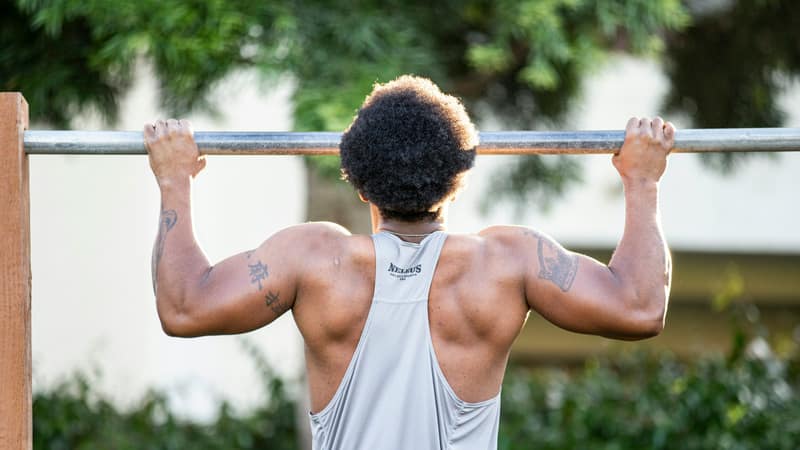
Tennis Elbow Physical Therapy in Tampa: Why Rest, Straps and Cortisone Fall Short
What’s actually irritated when your elbow hurts to grip, a five-point self-check, how to keep training, and the loading plan that gets your grip back.
The Shoulder in Hyrox
Surviving wall balls, burpees, and ski erg – how to build a shoulder that handles hybrid volume.
Continue Reading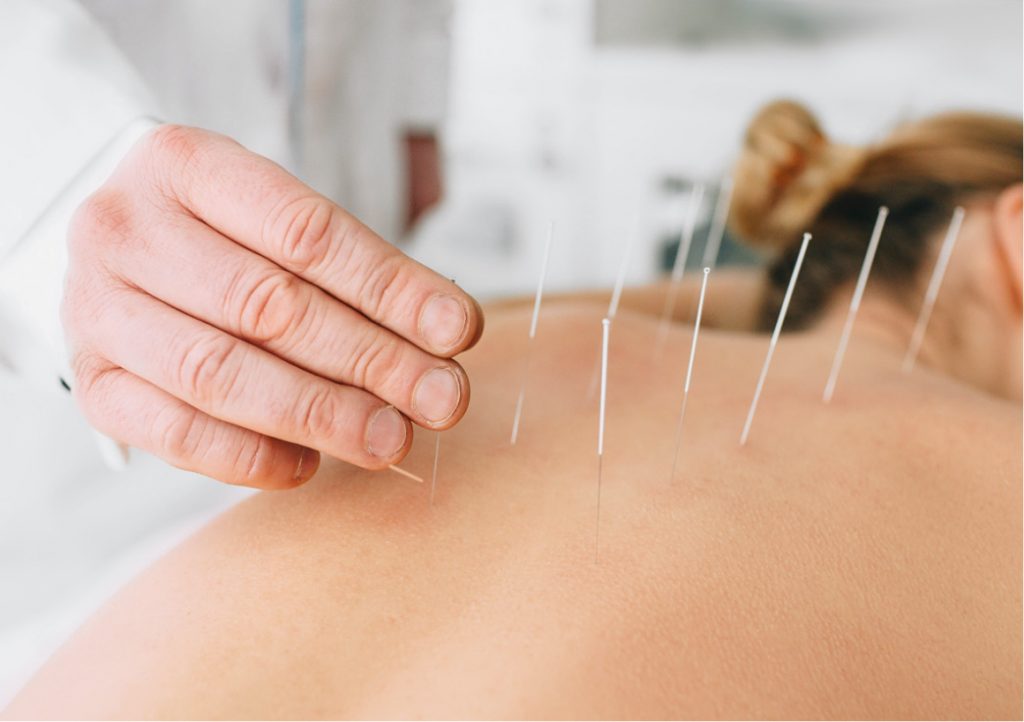
Dry Needling in Tampa: A Performance PT’s Guide
What dry needling actually is, who it helps in Tampa Bay, and how it fits inside a lifter’s or runner’s rehab plan at Forward Physio.
Continue Reading
Return to Lifting After a Back Injury
A Tampa sports PT’s framework for rebuilding barbell strength after a back injury — without the endless cycle of flare-ups.
Continue Reading